Kamikochi, Nagano Prefecture

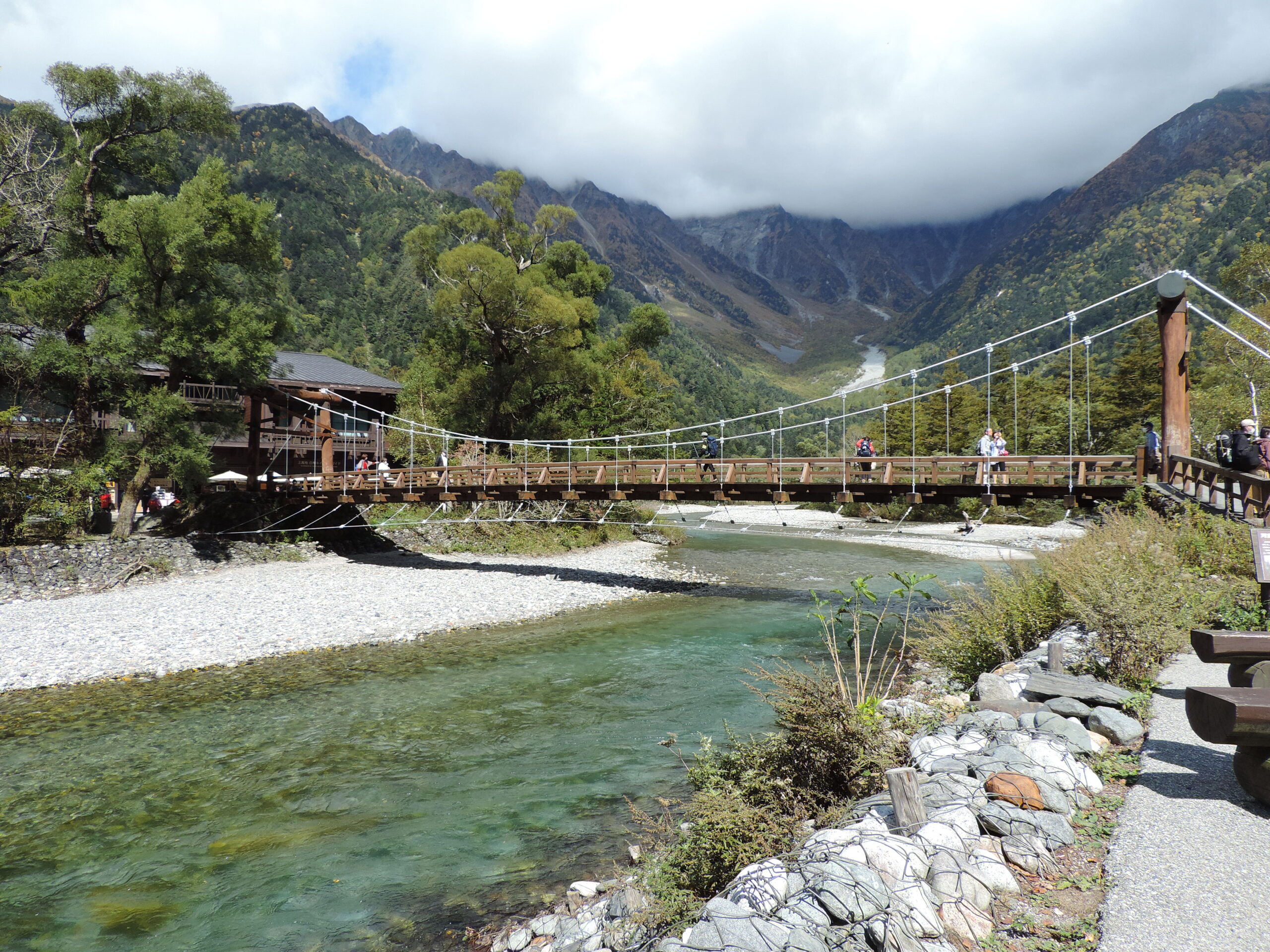
It was still a little early for the autumn leaves, but we started by walking from Taisho Pond to Kappa Bridge, Myojin Pond and the shrine.
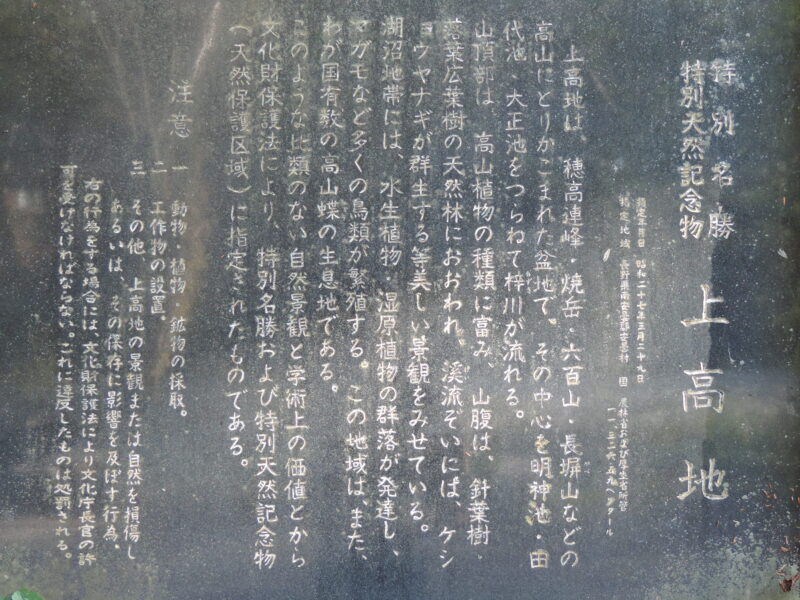
Kamikochi is designated as a Special Place of Scenic Beauty and a Special Natural Monument, thanks to its unique natural scenery of alpine plants, aquatic animals and wetland plants, as well as its scientific value.
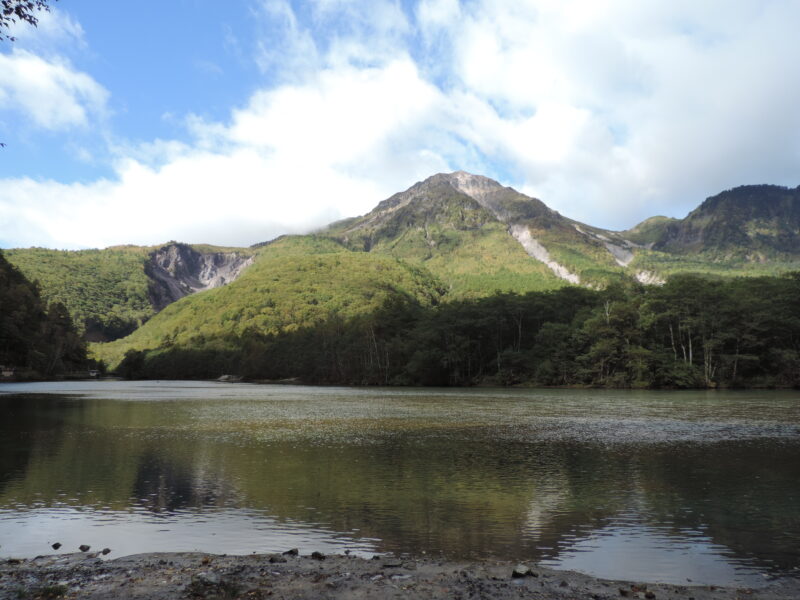
Taisho Pond
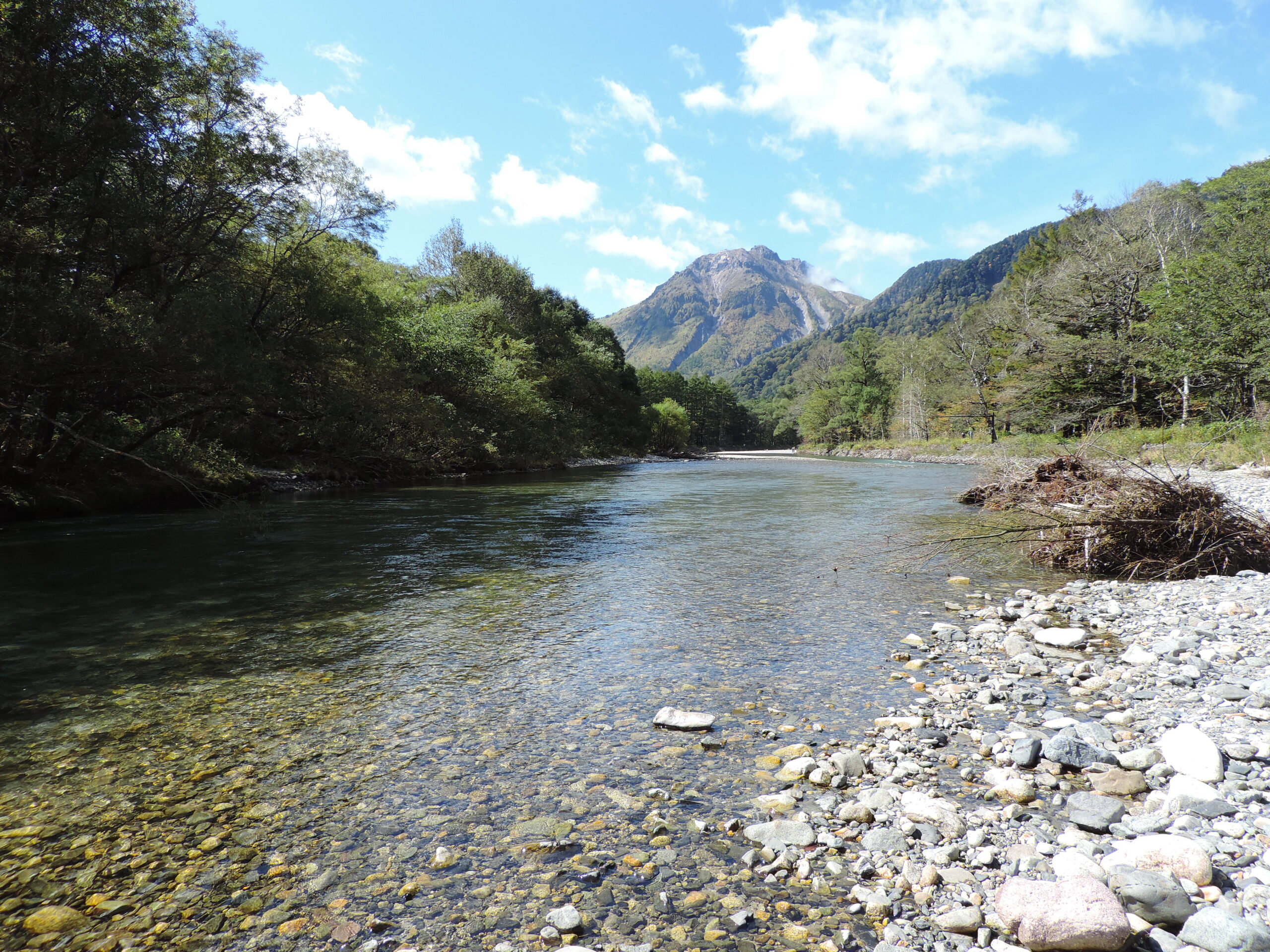
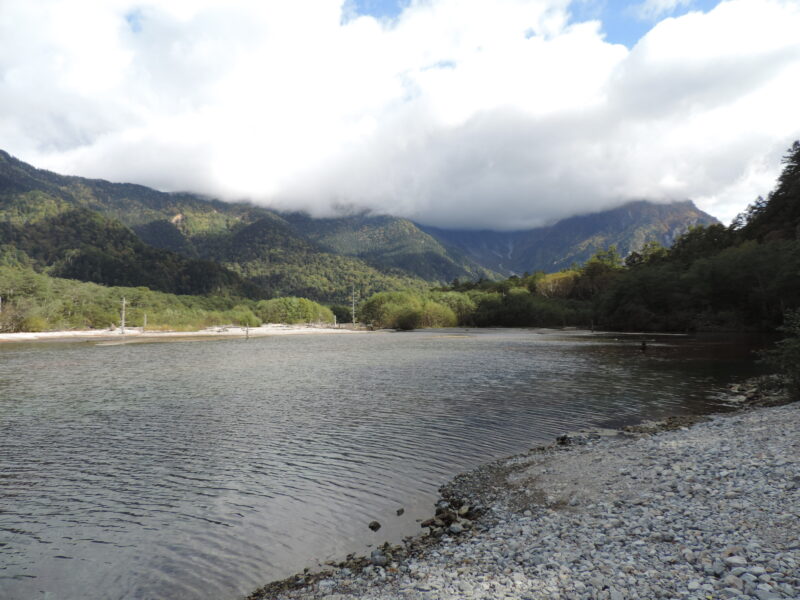
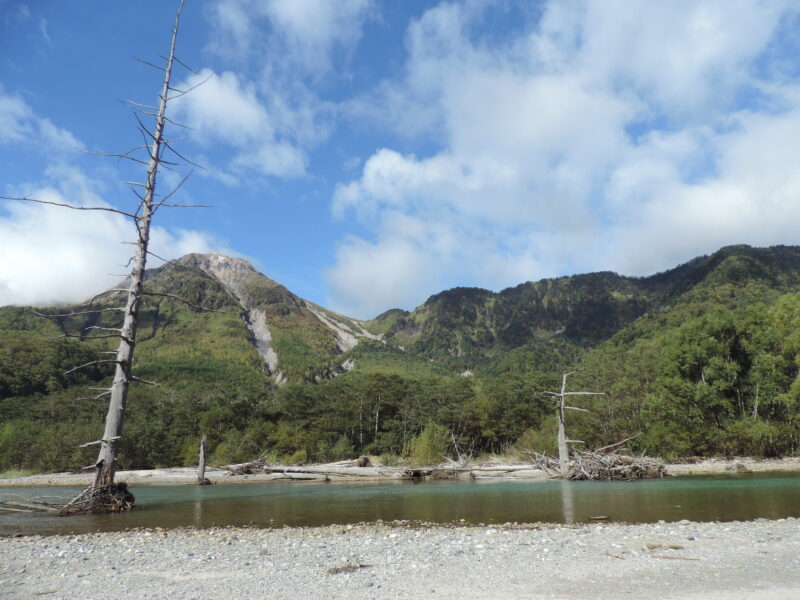
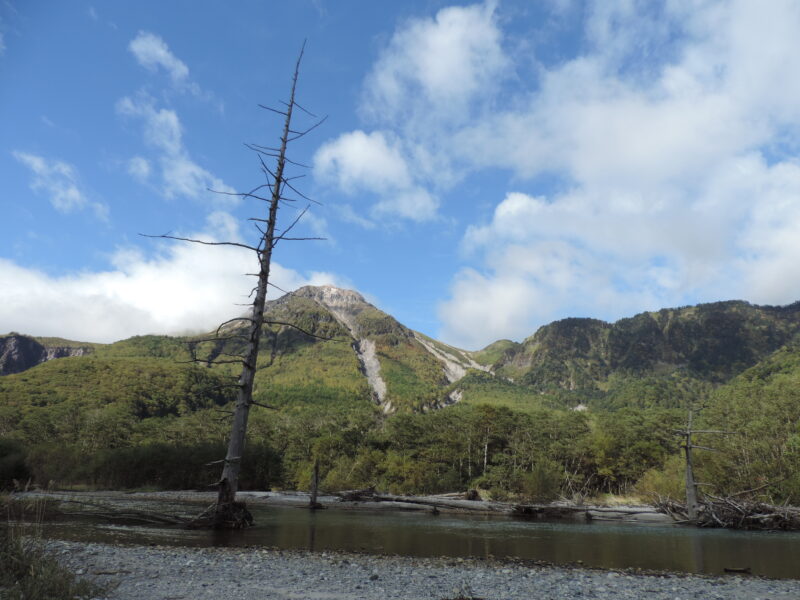
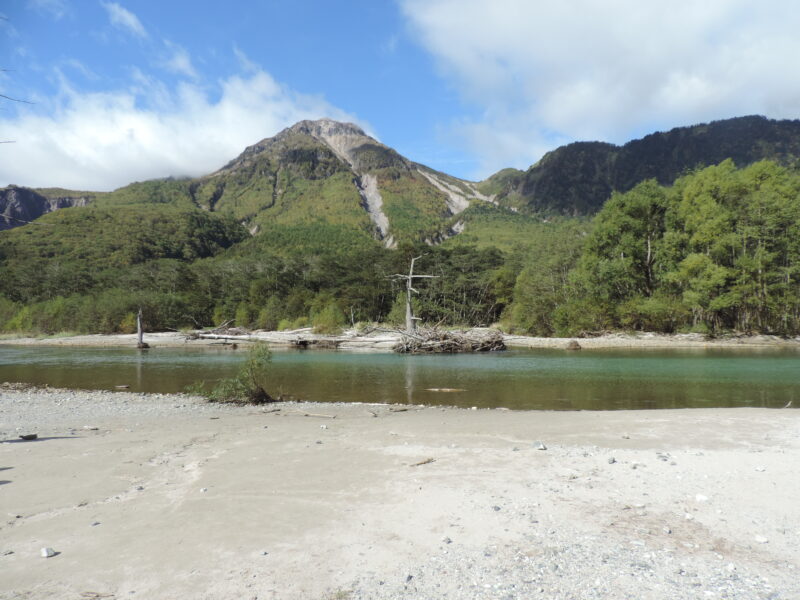
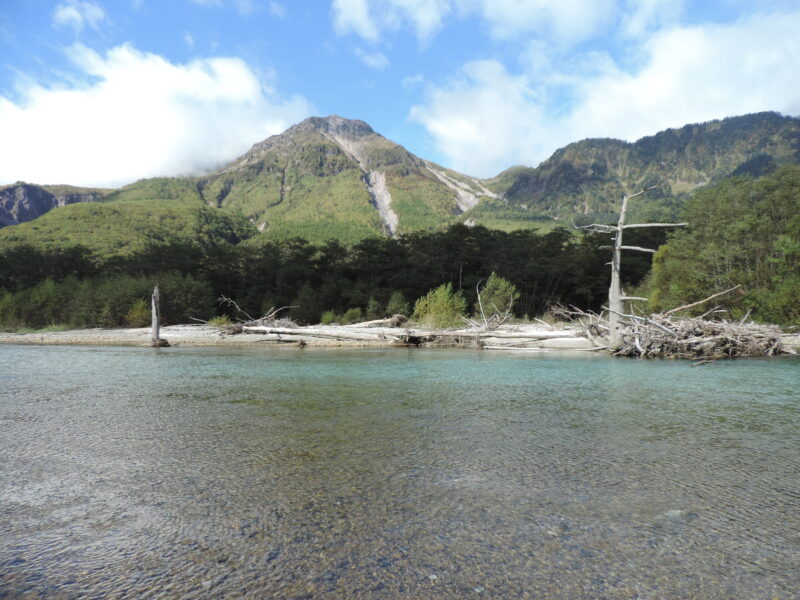
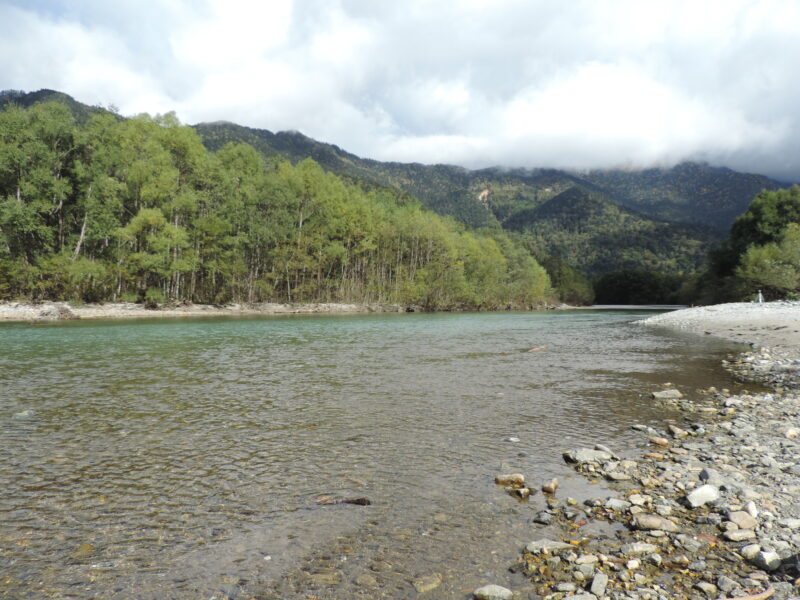
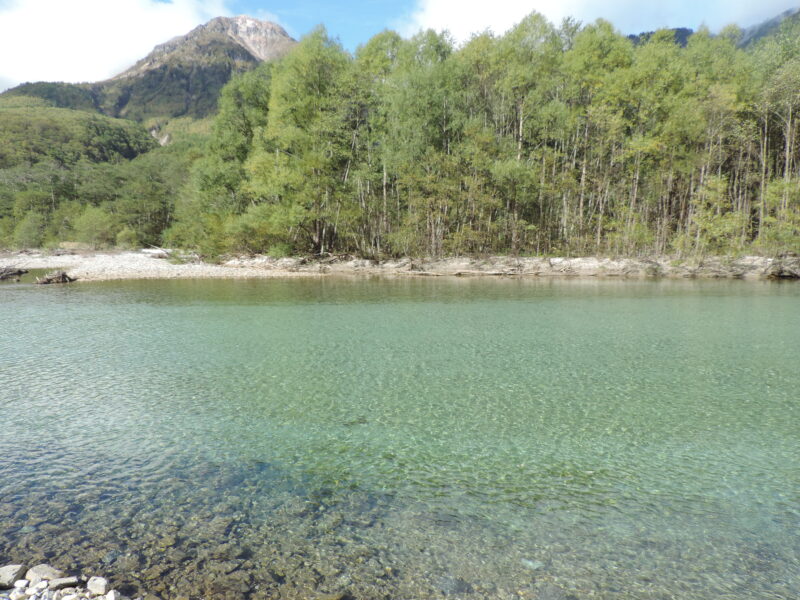
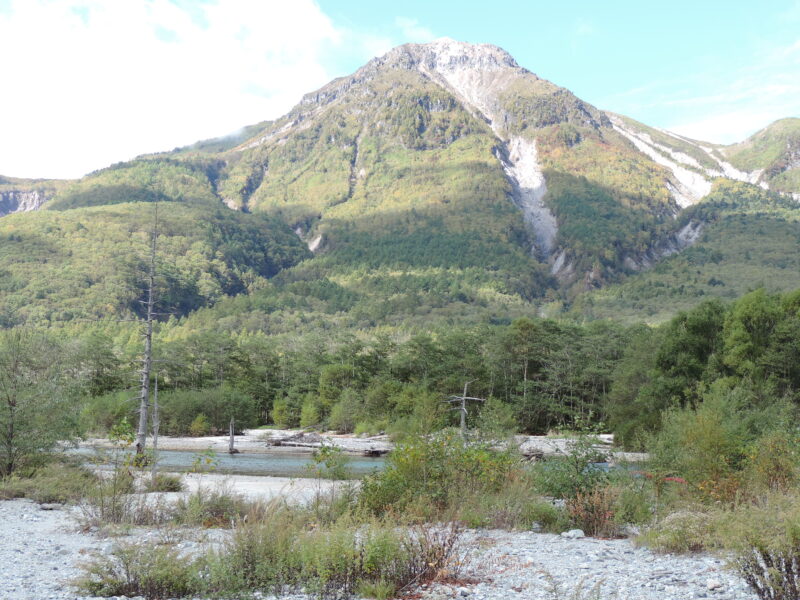
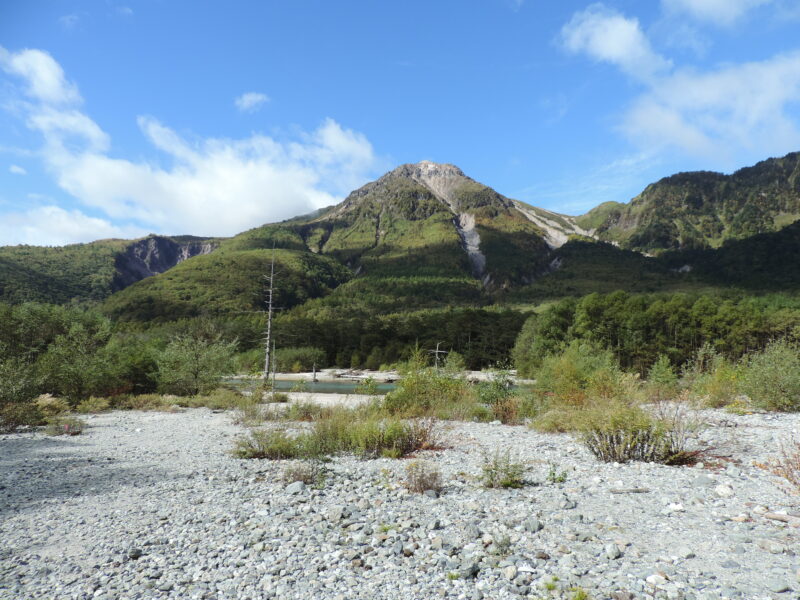
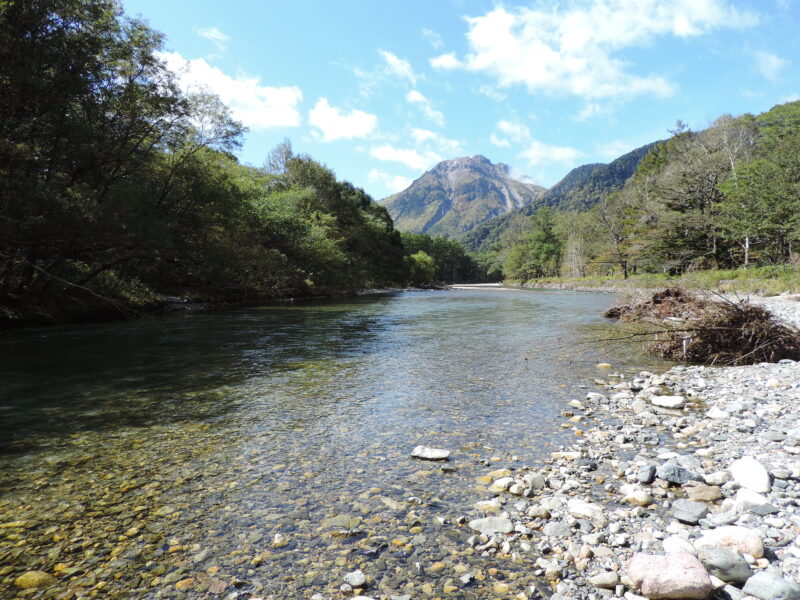
This is Taisho Pond. We had a good view of Mt. Yakedake.
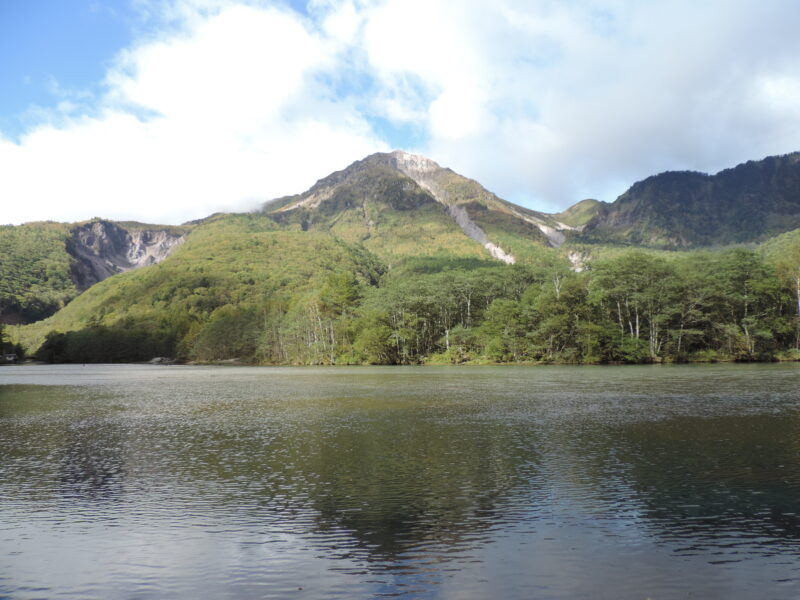
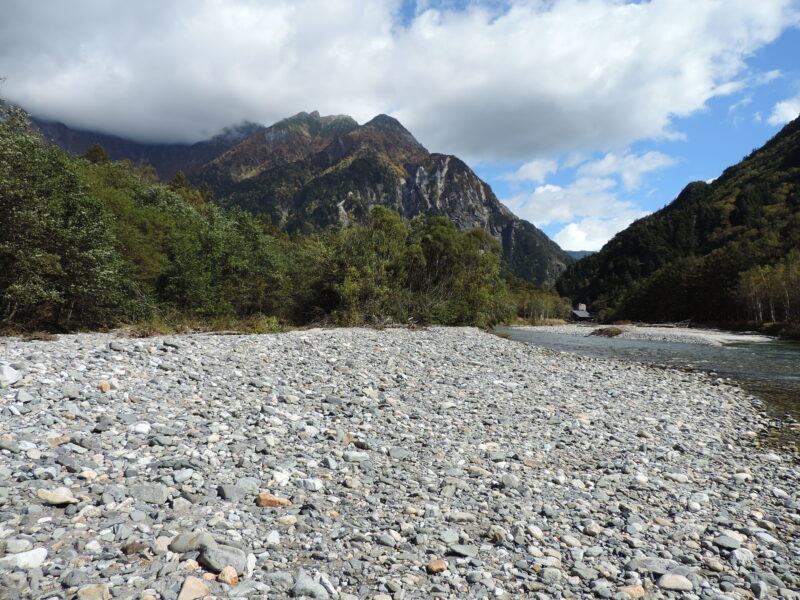
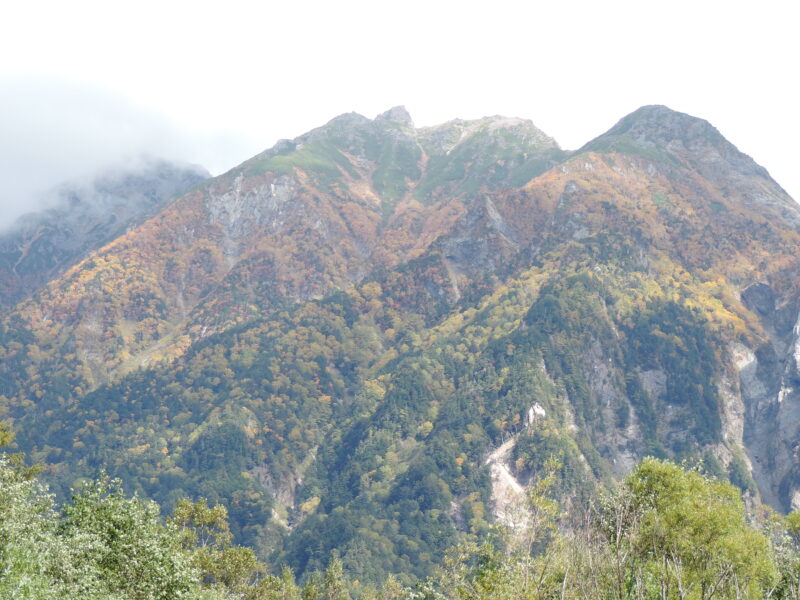
Unfortunately, clouds covered the tops of the other mountains, so we could not see their peaks.
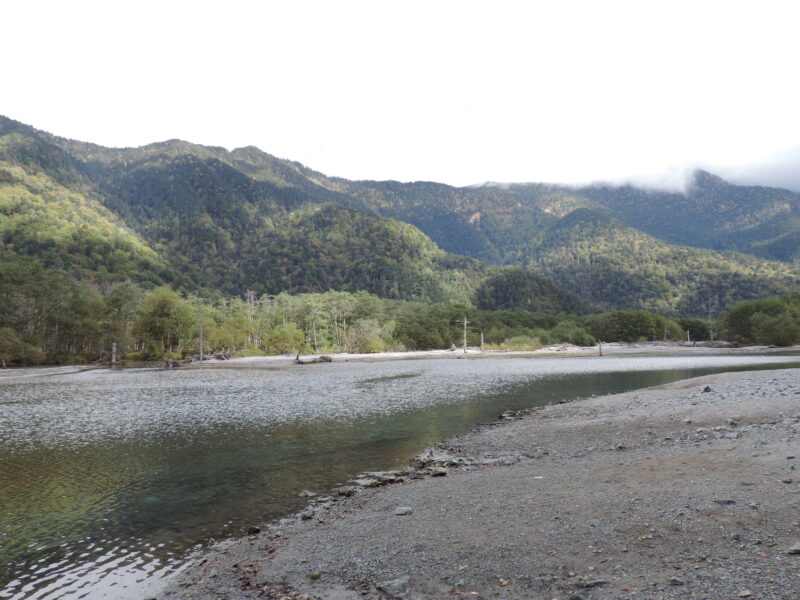
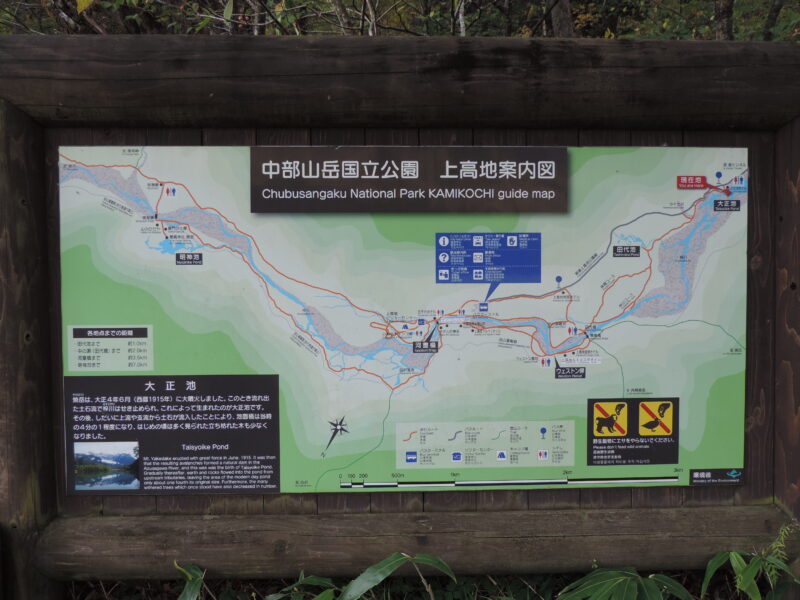
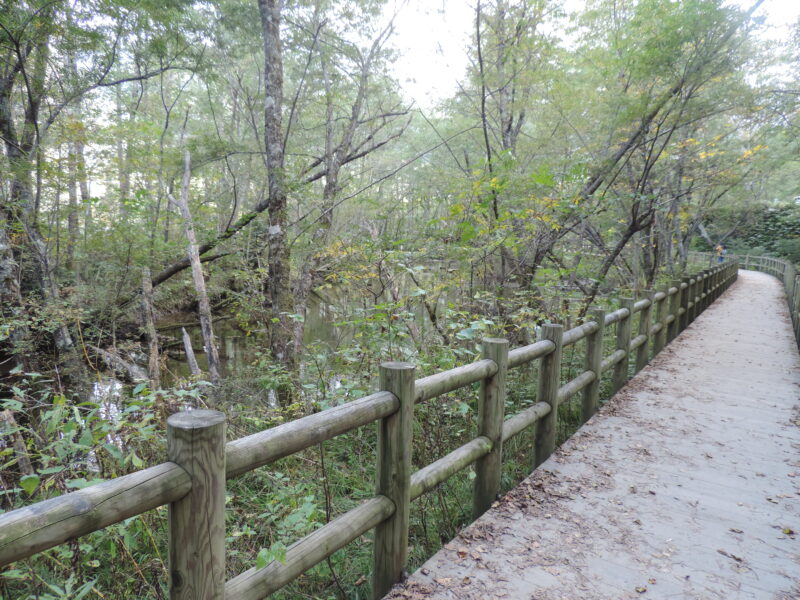
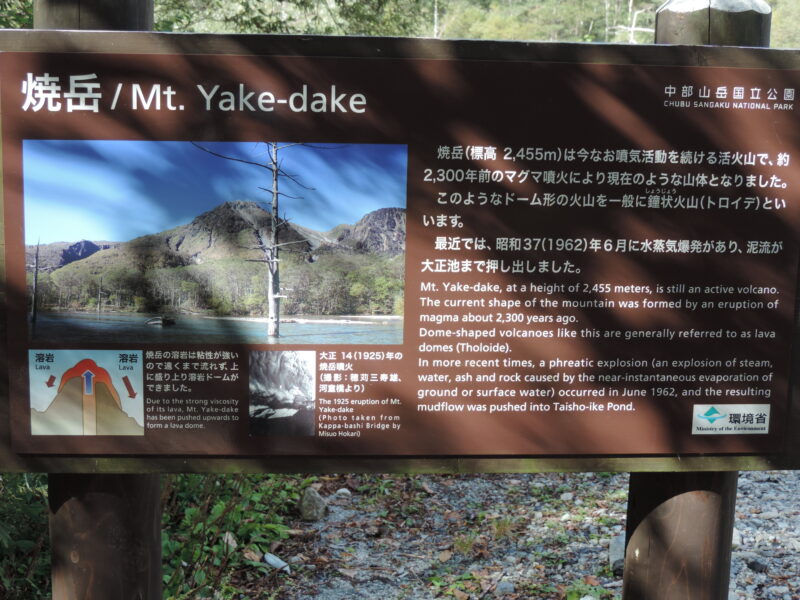
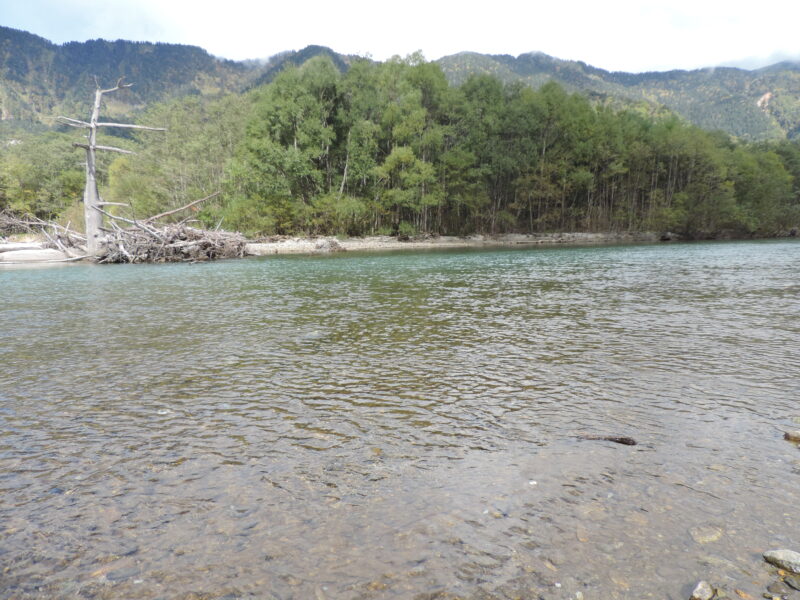
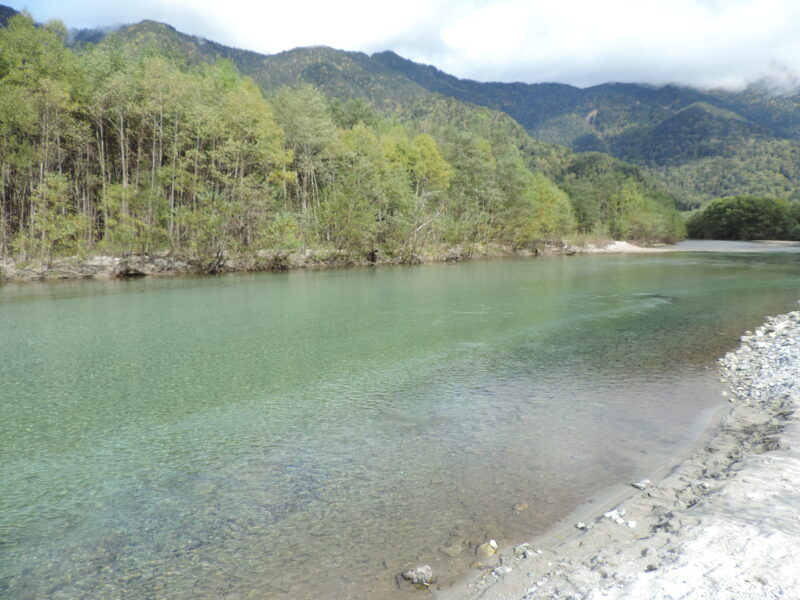
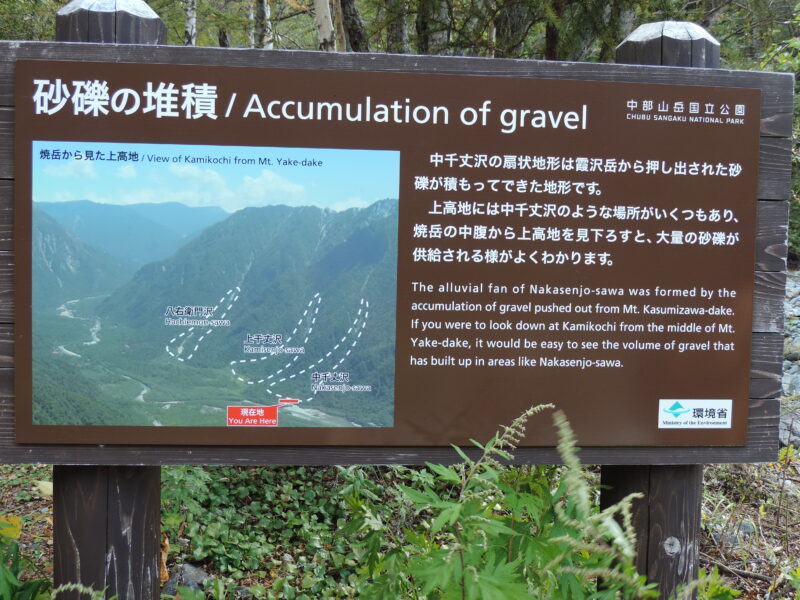
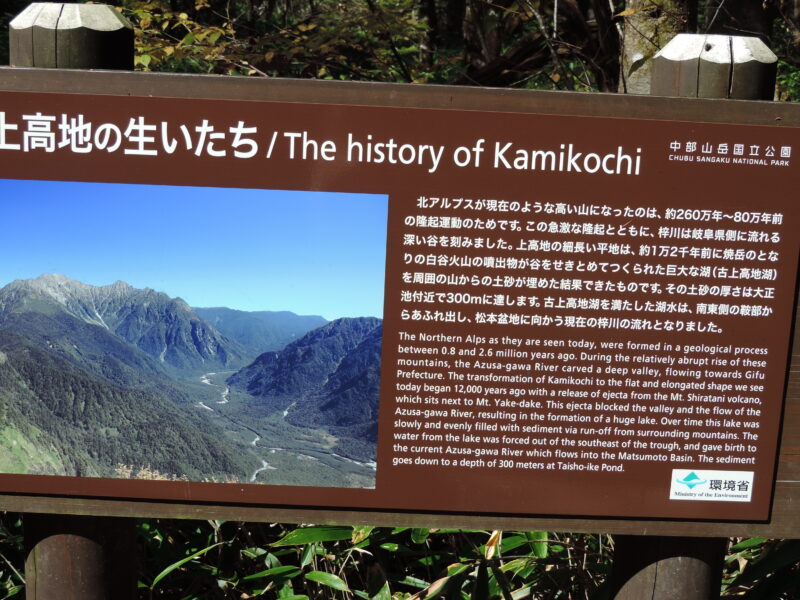
Taisho Pond was created in 1915, when an eruption of Mt. Yakedake dammed the Azusa River. The pond is filled with deep emerald water, and the dead trees standing in it give it a mysterious atmosphere.
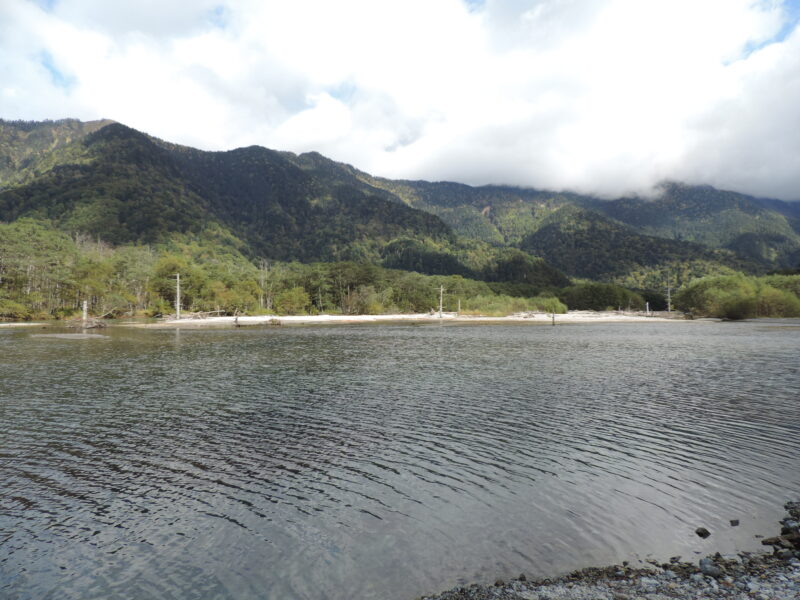
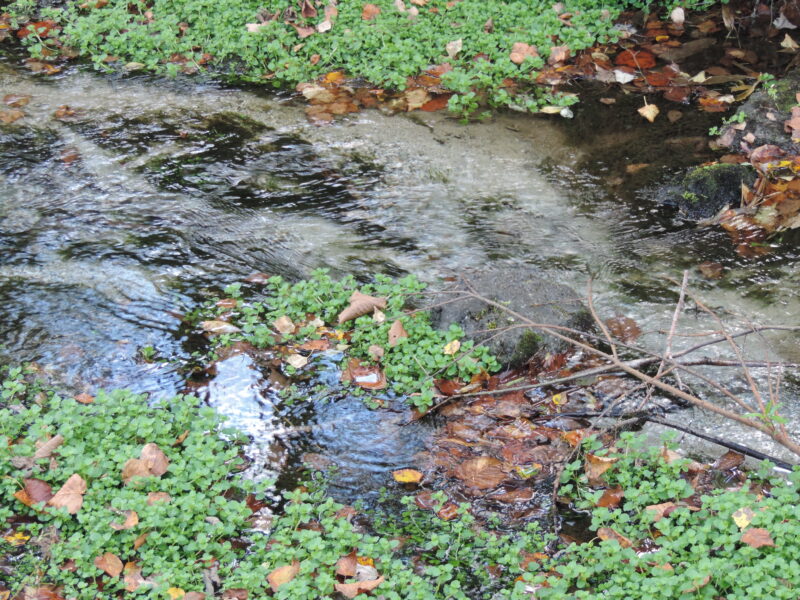
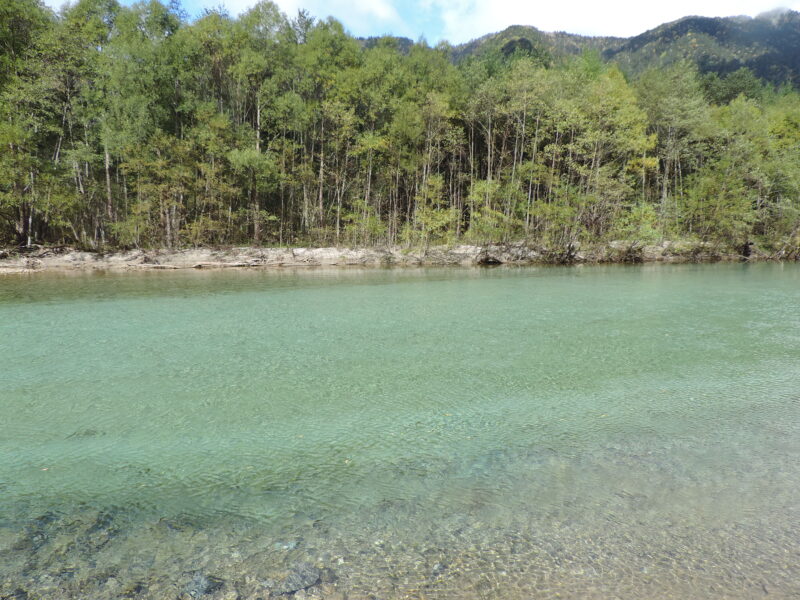
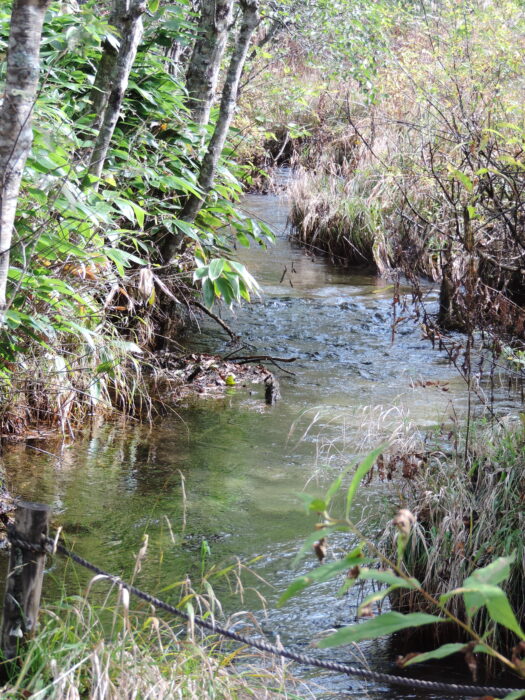
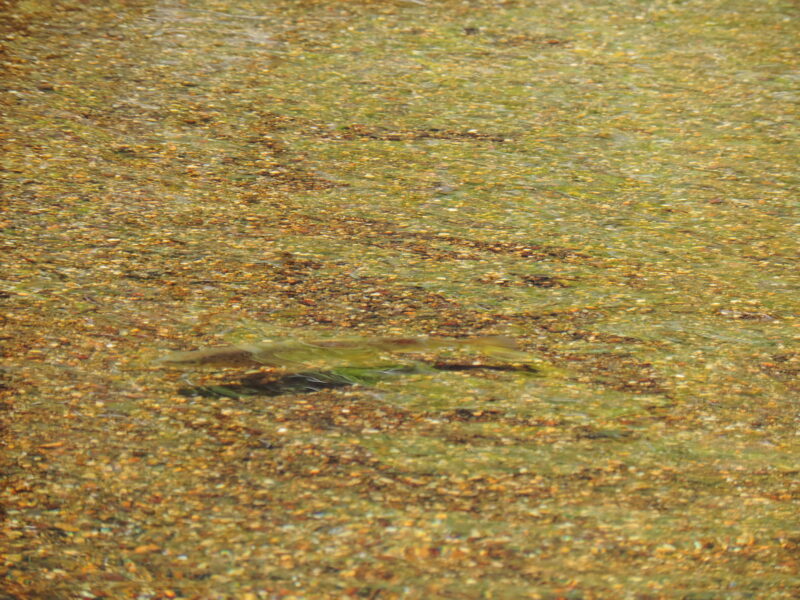
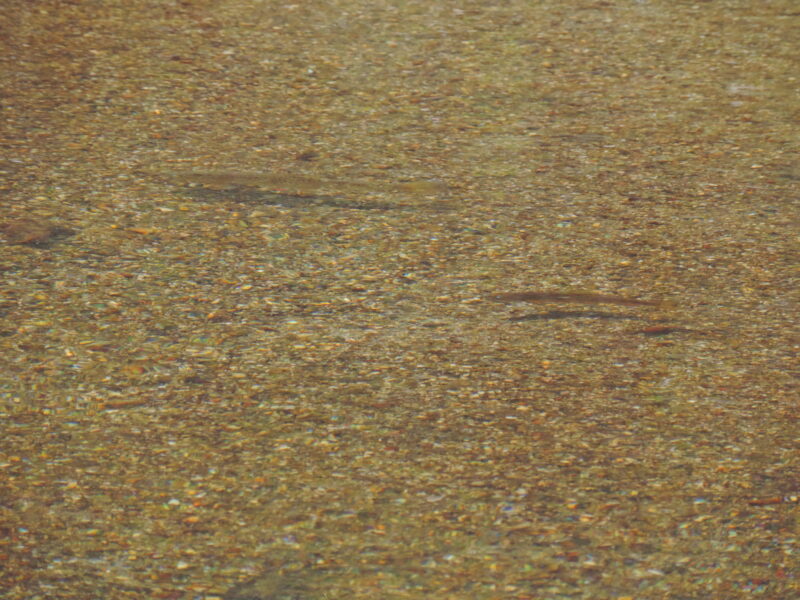
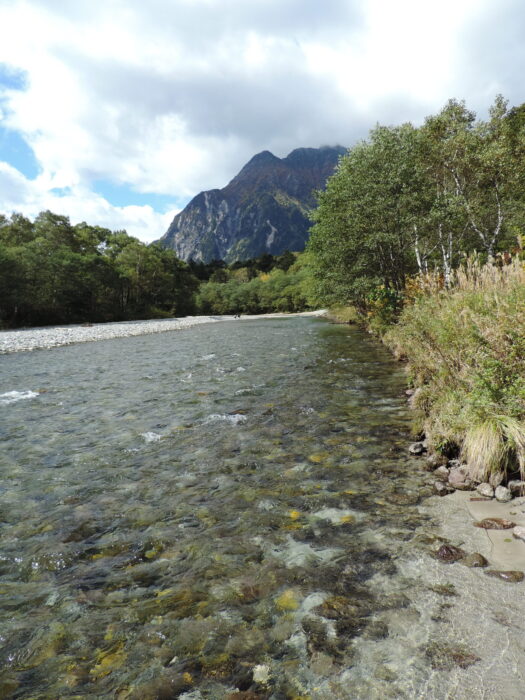
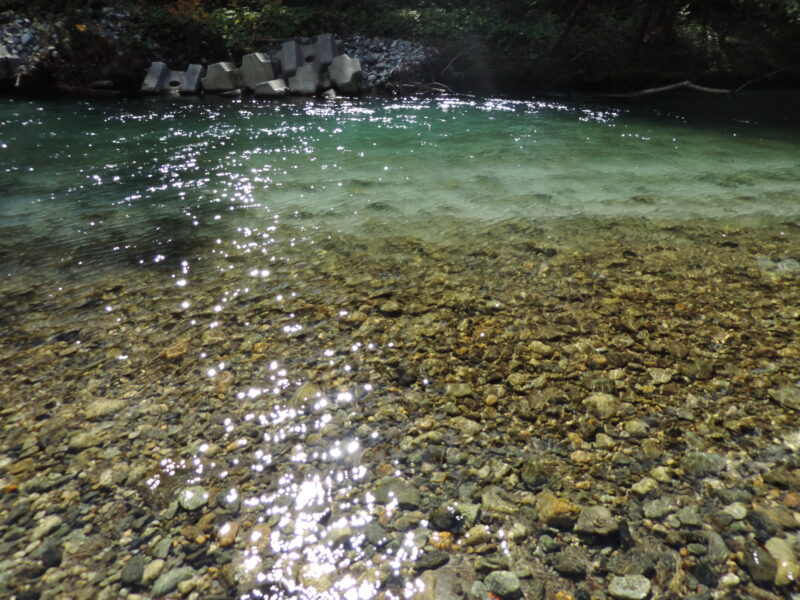
The water is very clean.
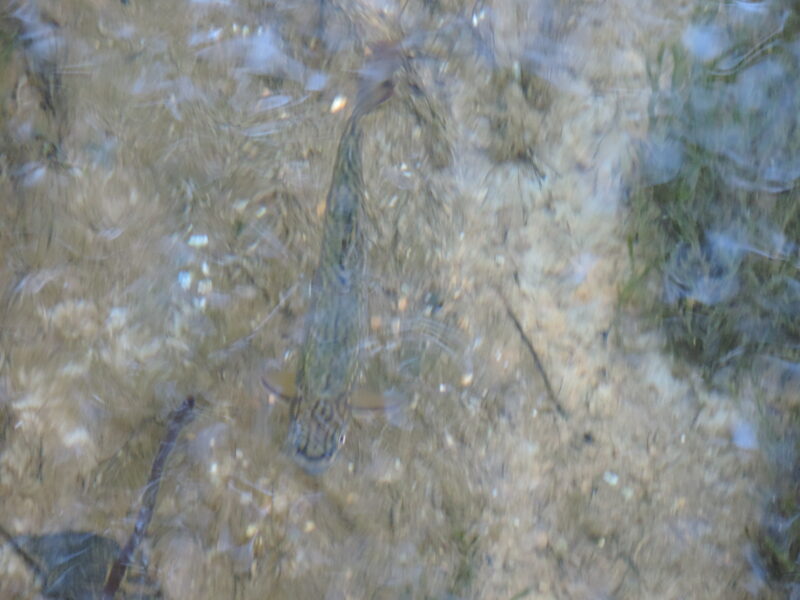
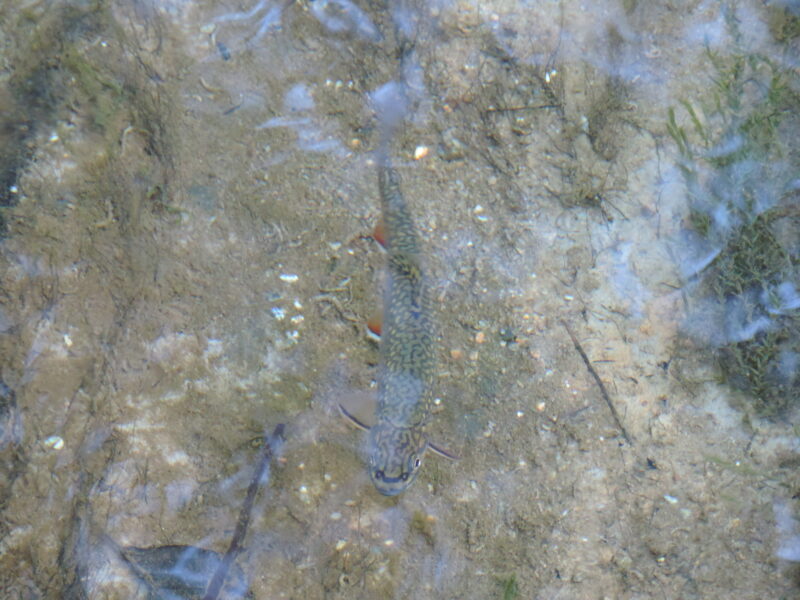
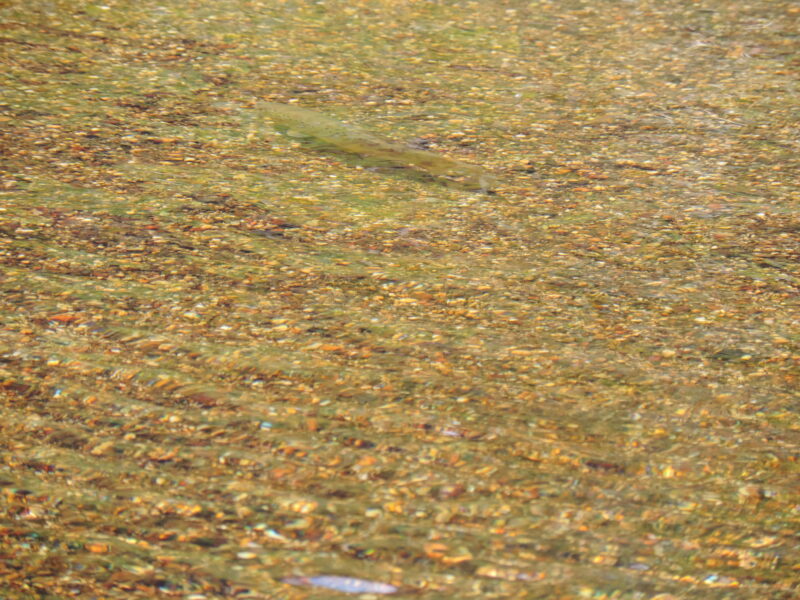
You can also see fish. Perhaps they are iwana (char)?
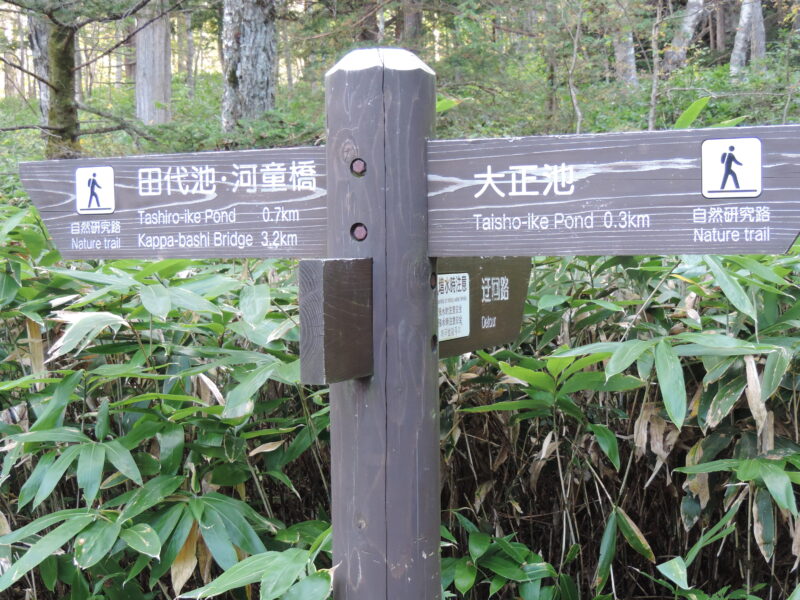
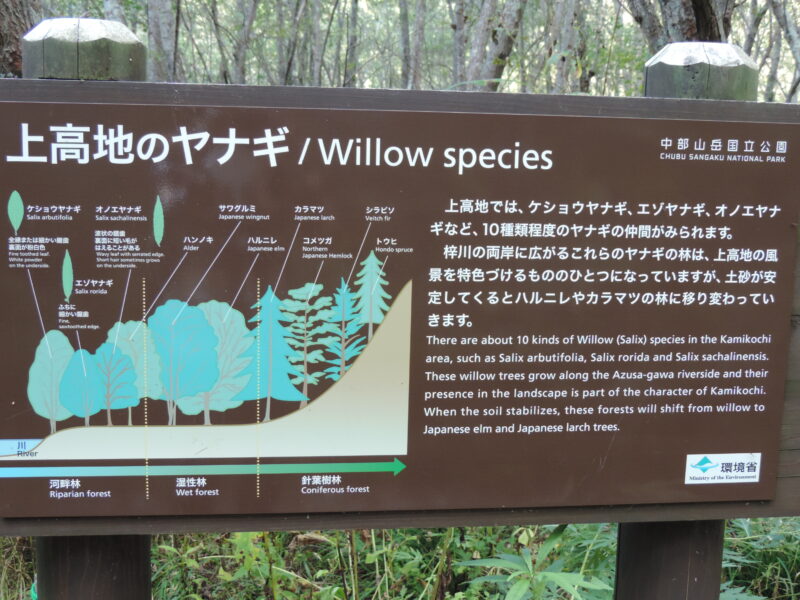
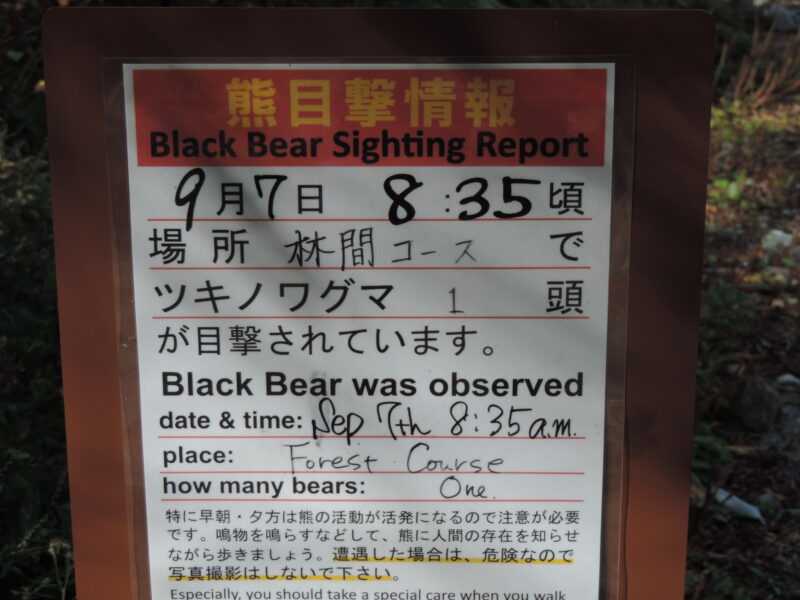
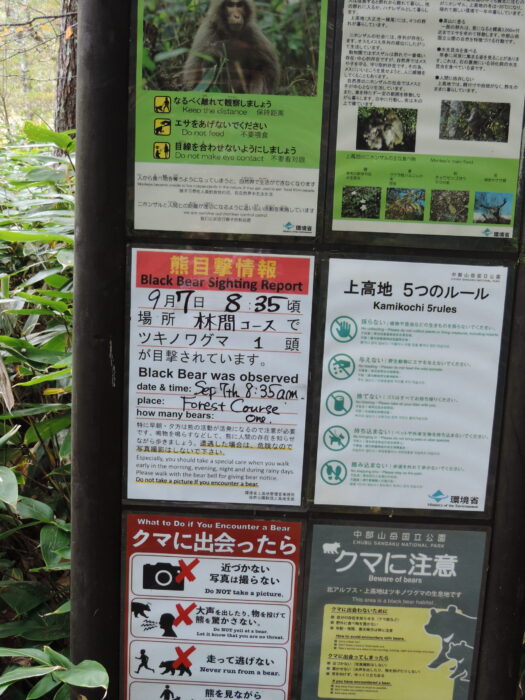
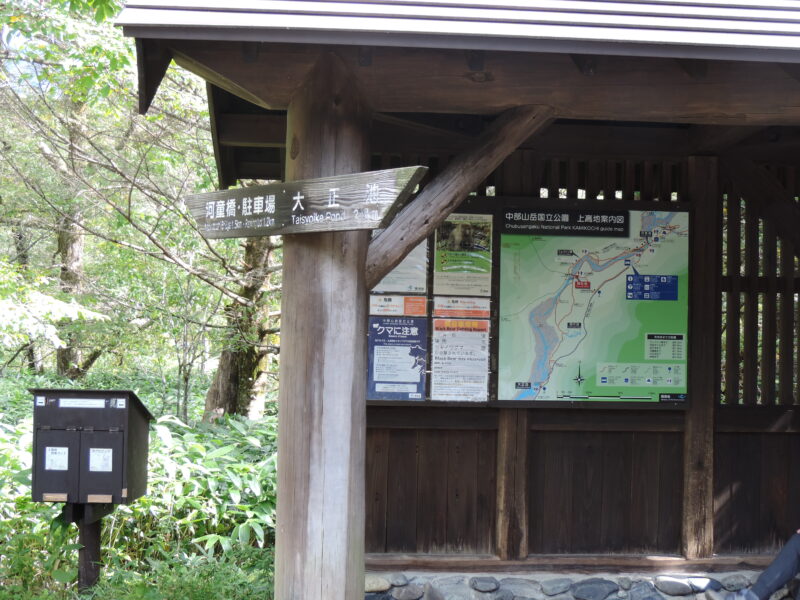
A notice warned about bear sightings in the area.
Click the video below to watch.
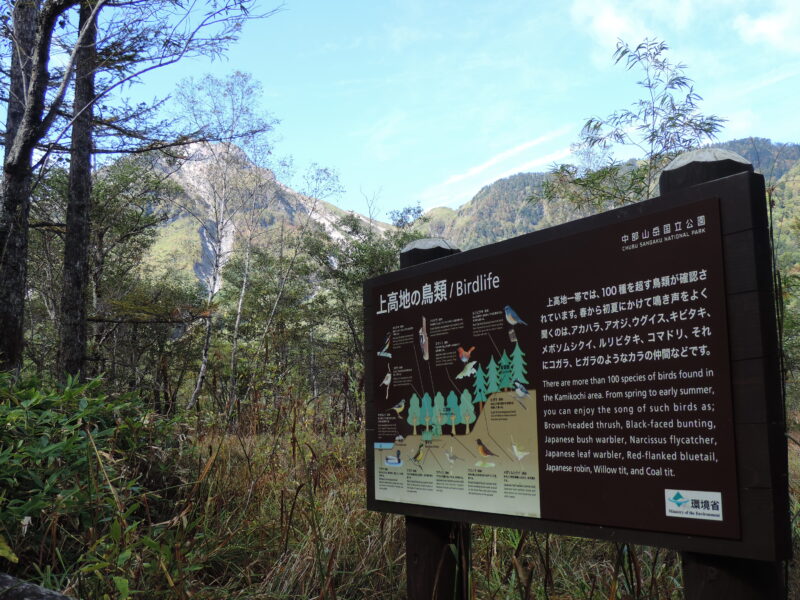
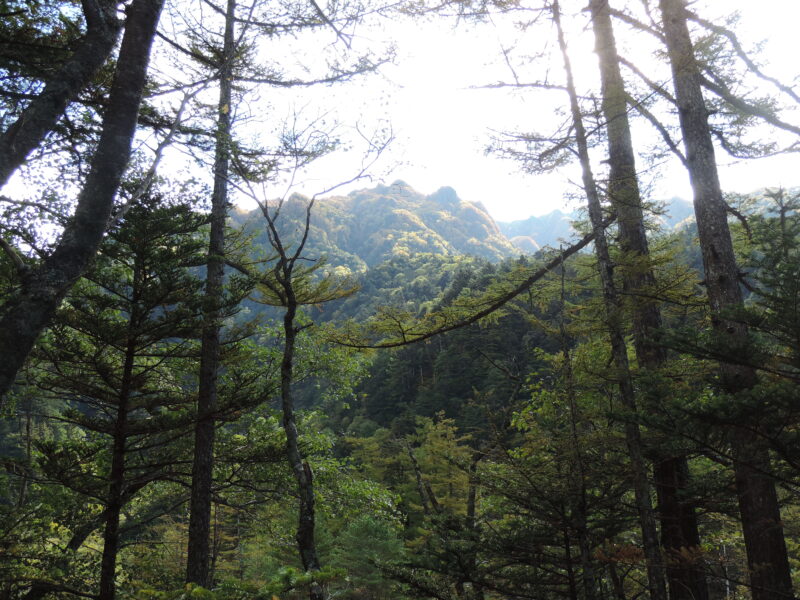
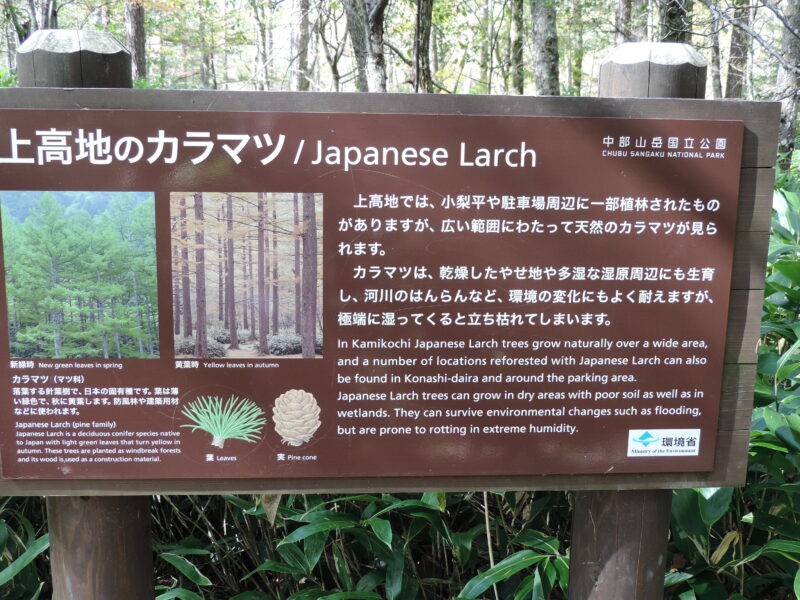
Click the video below to watch.
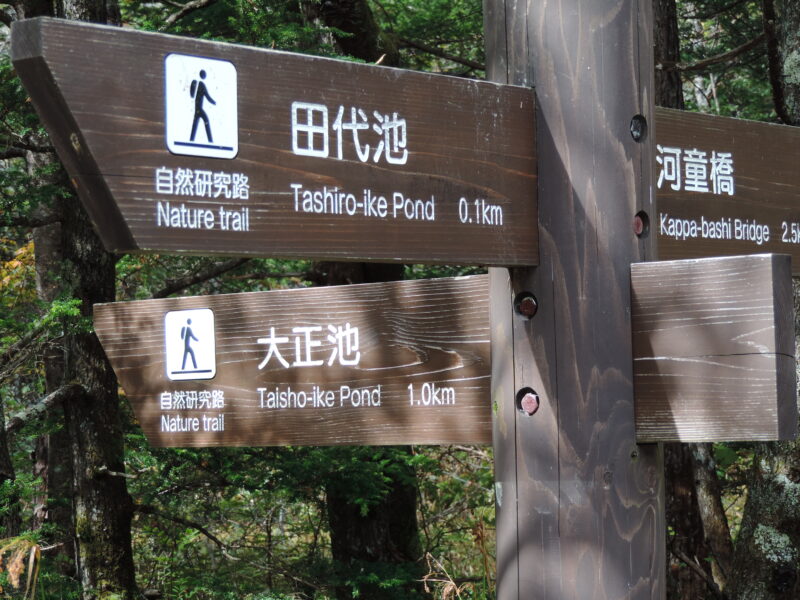
Tashiro Pond
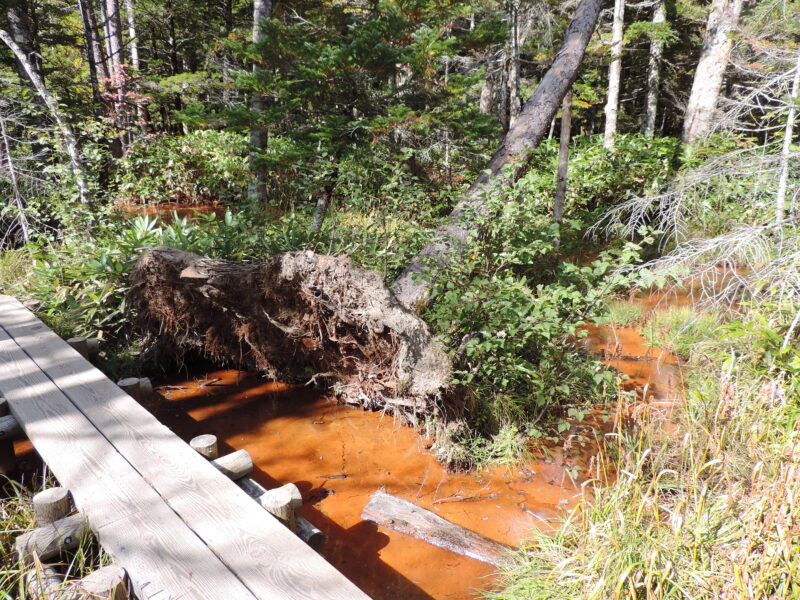
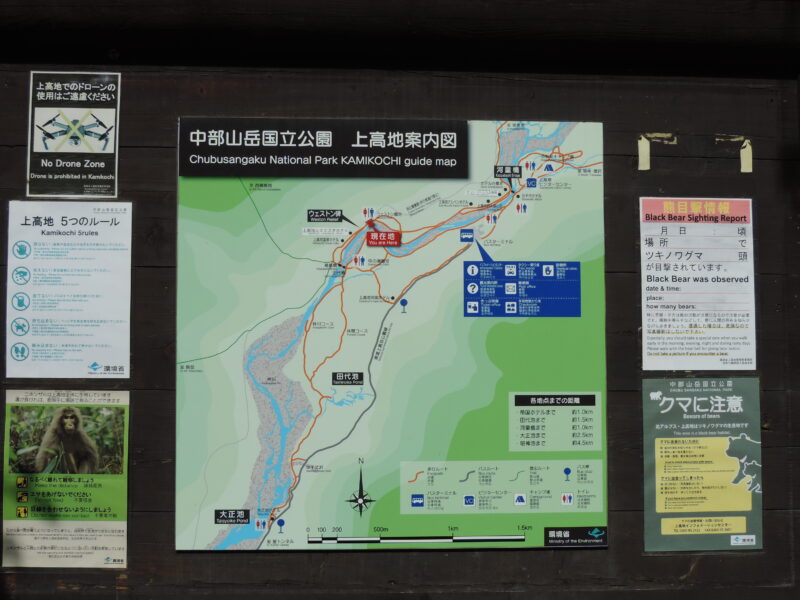
This is Tashiro Pond, a shallow pond in an open marsh surrounded by virgin forest. It was formed by sediment carried by the Hachiemon stream and other streams. There are several small islands in the pond, and the scenery is calm and gentle. The fresh green of May, the yellow leaves of October and the frost-covered trees on misty late-autumn mornings are all highly recommended.
In the Tashiro marsh, covered with sedges, the Hotaka mountain range is reflected in the clear water, accented in early summer by the orange blossoms of Japanese azaleas.
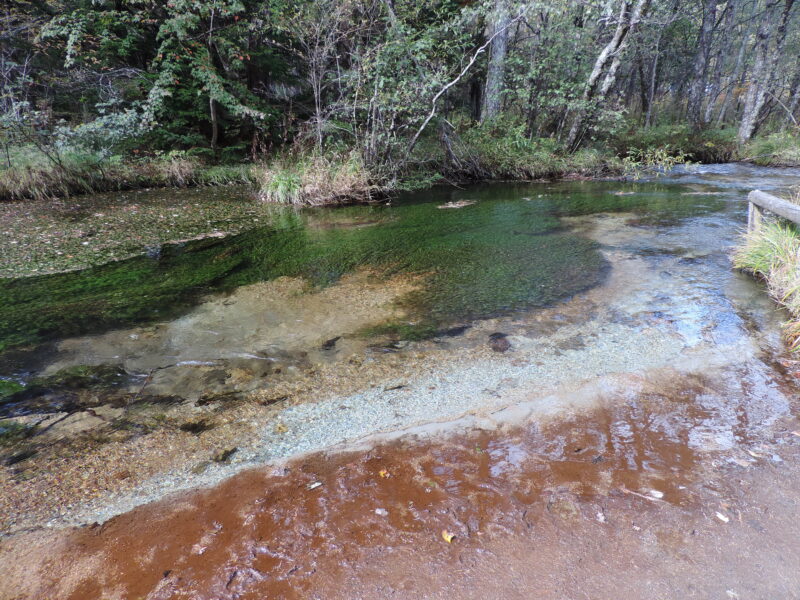
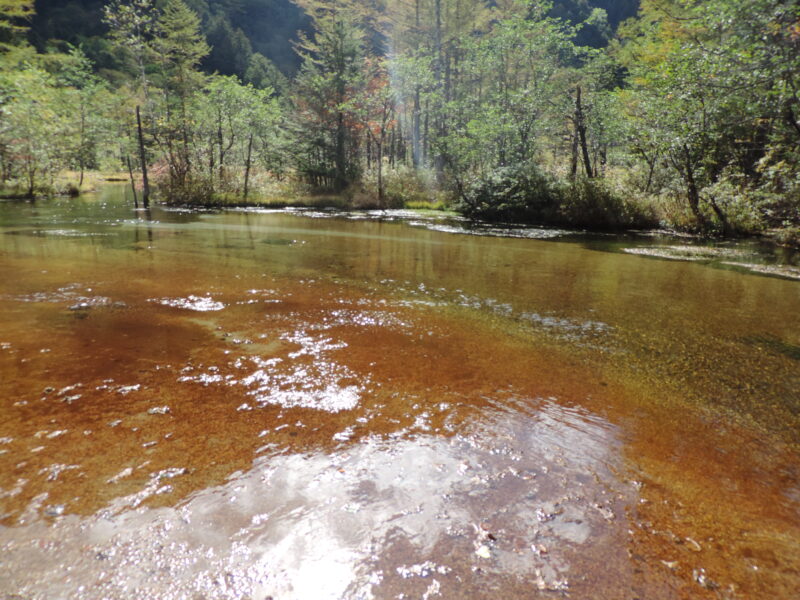

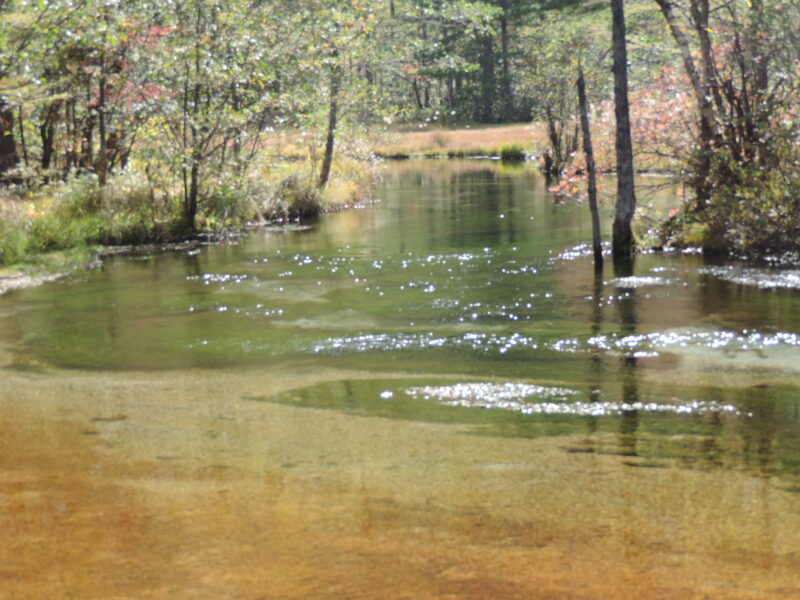
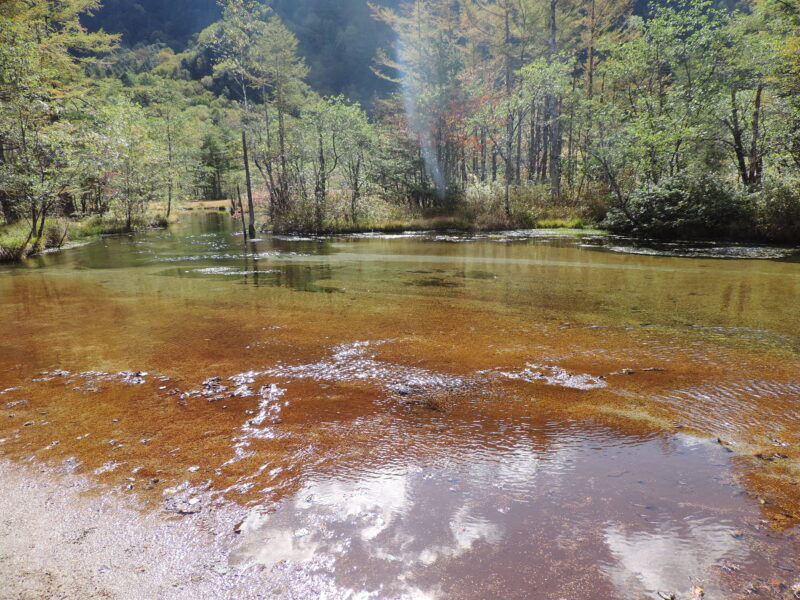
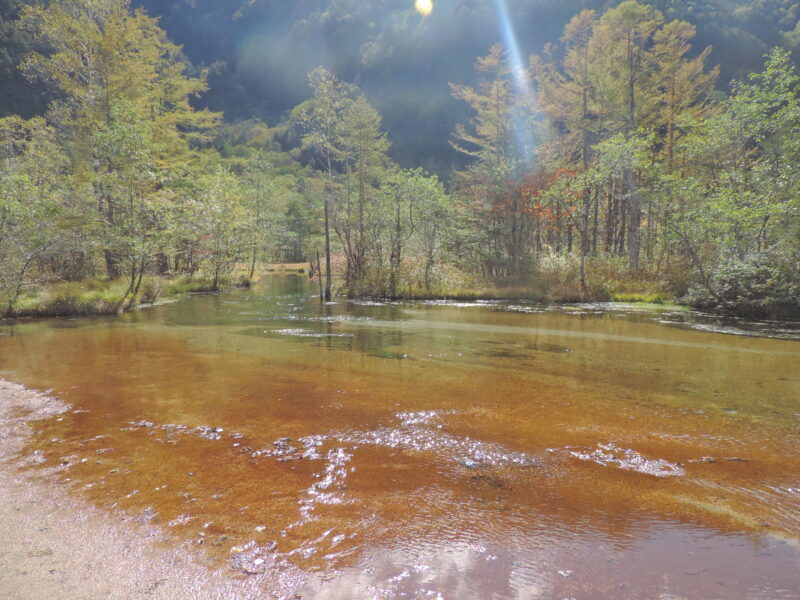
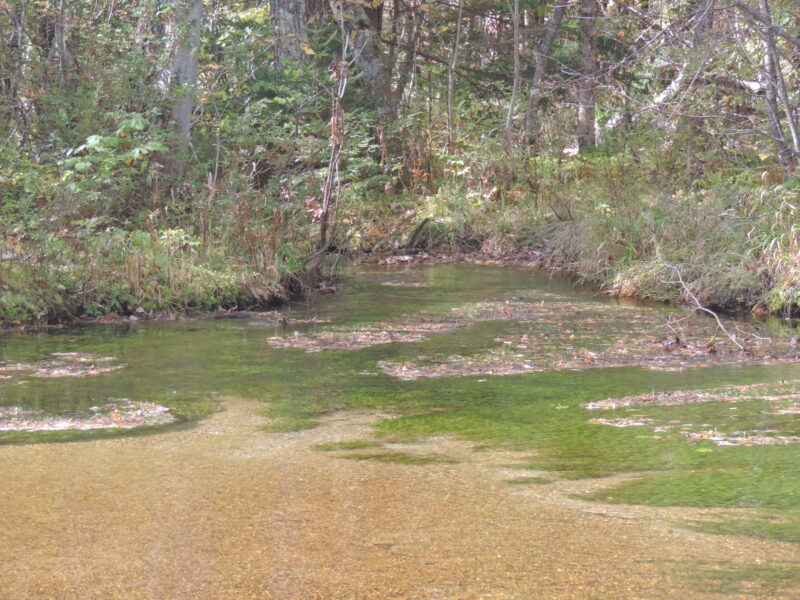
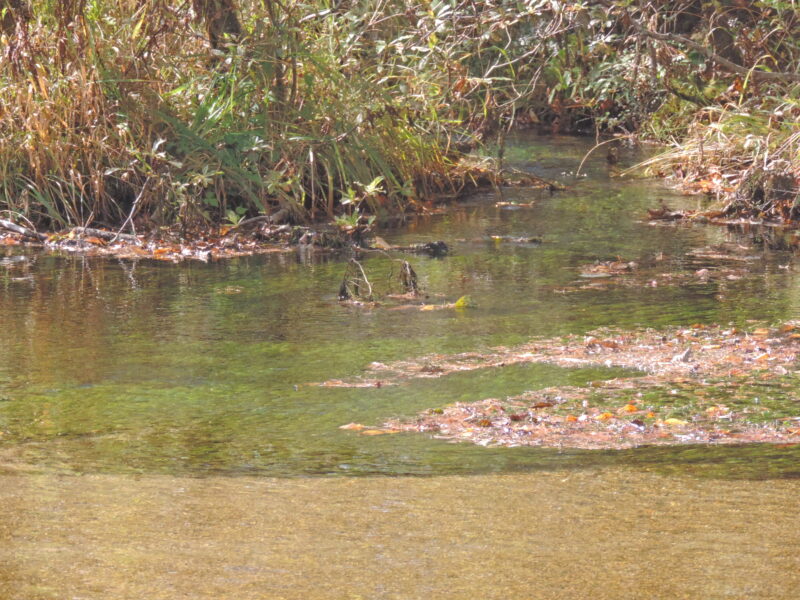
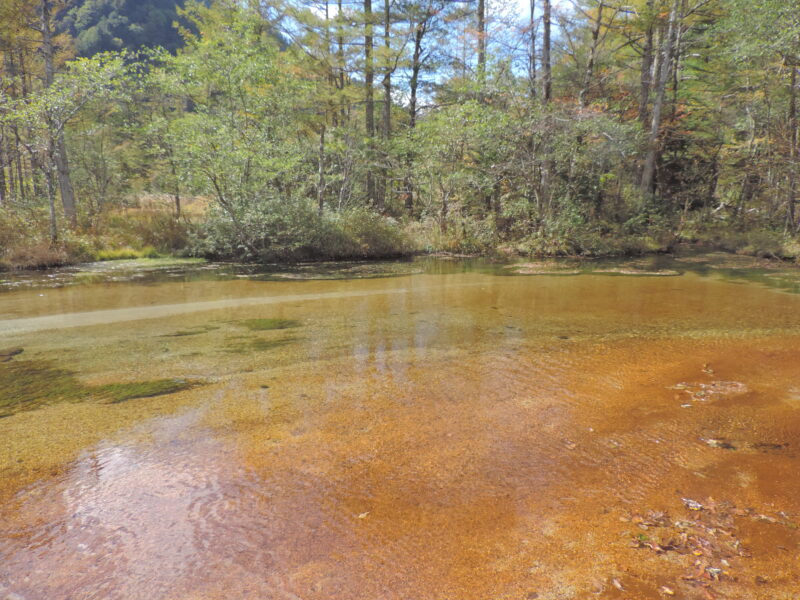
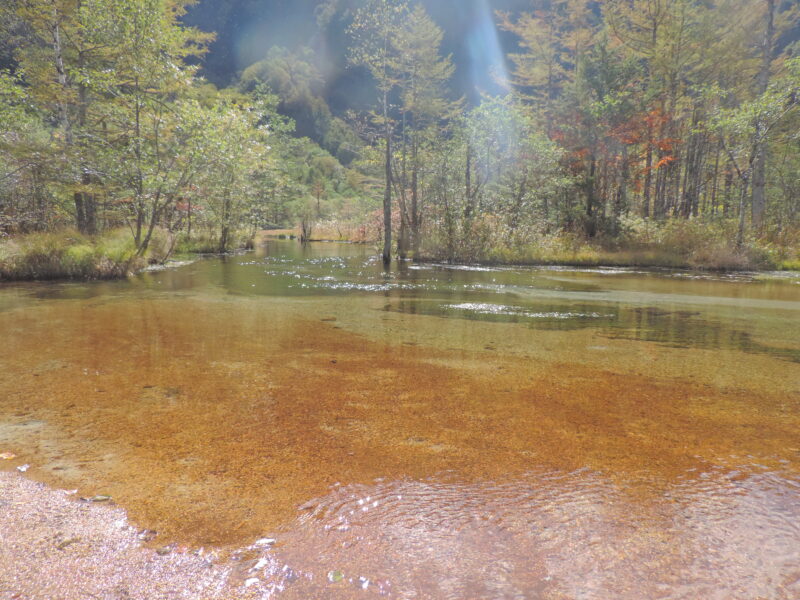
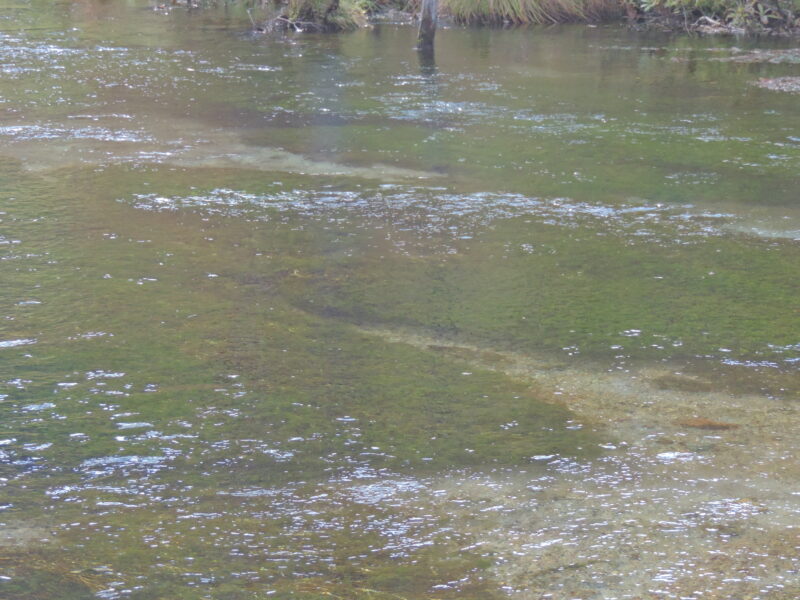
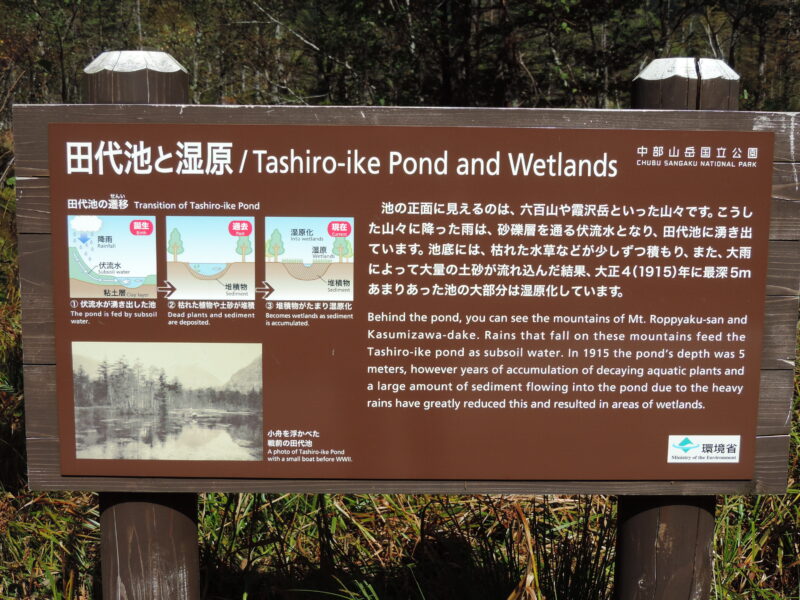
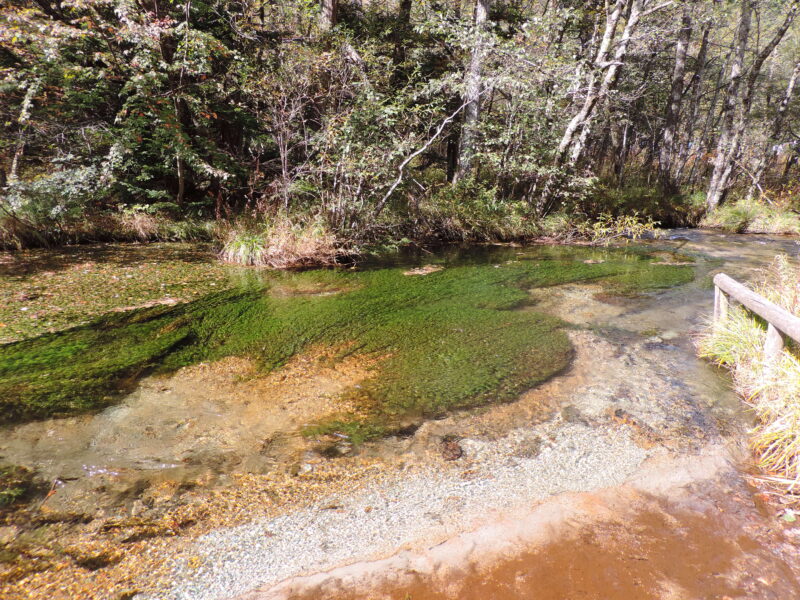
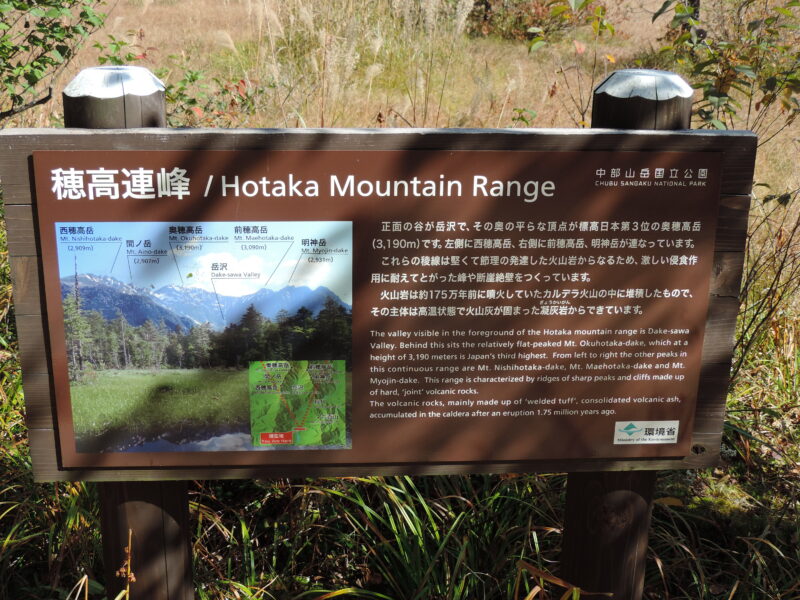
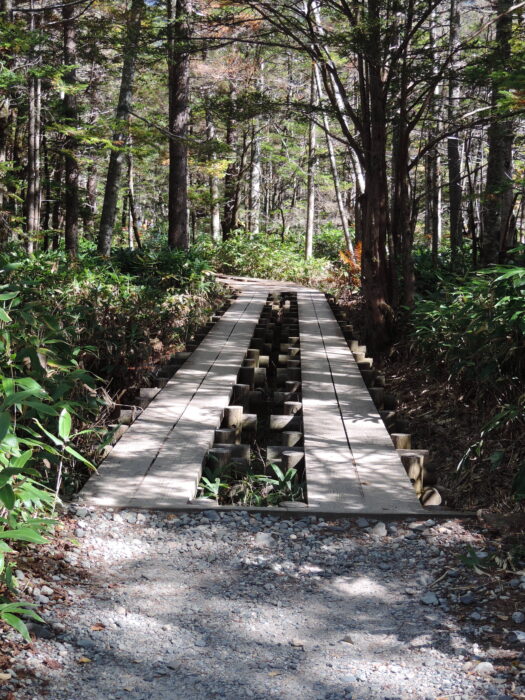
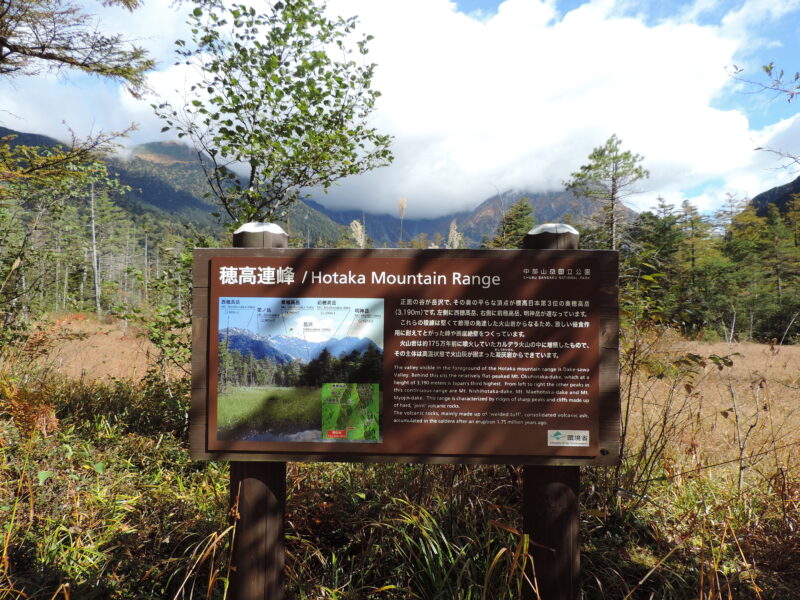
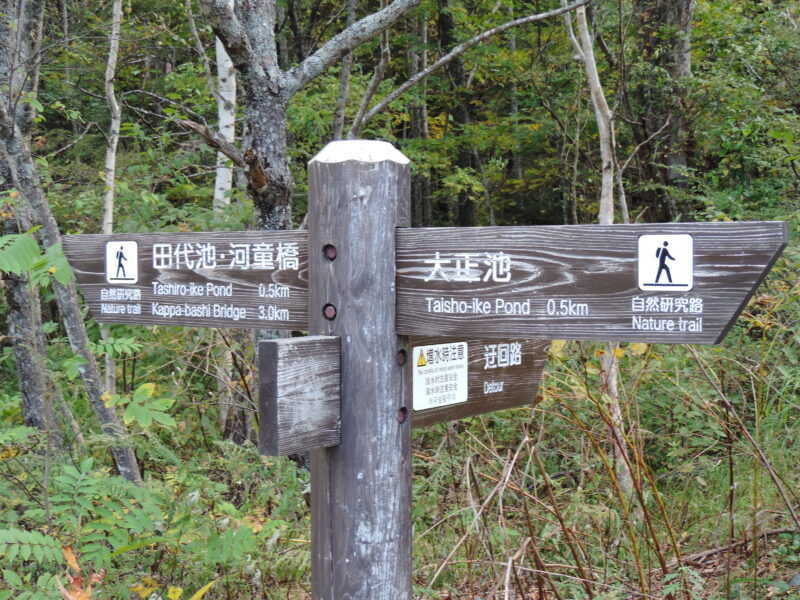
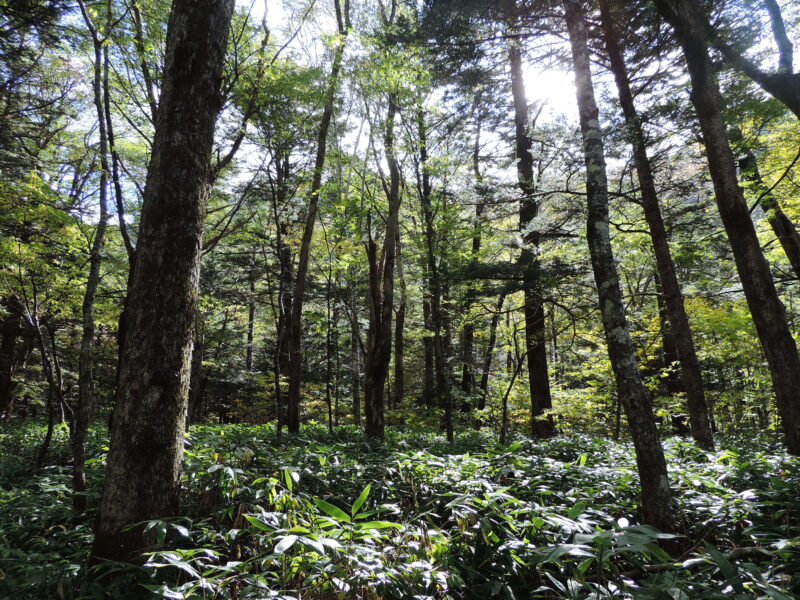
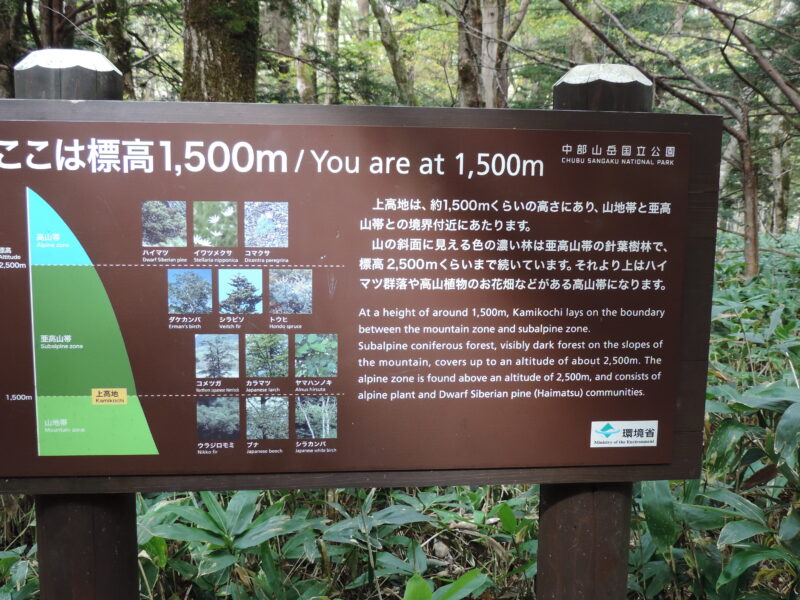
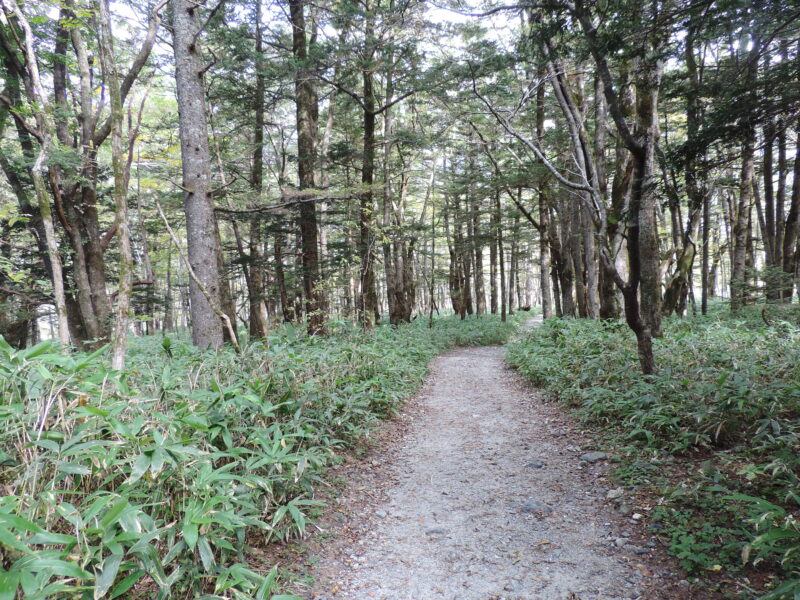
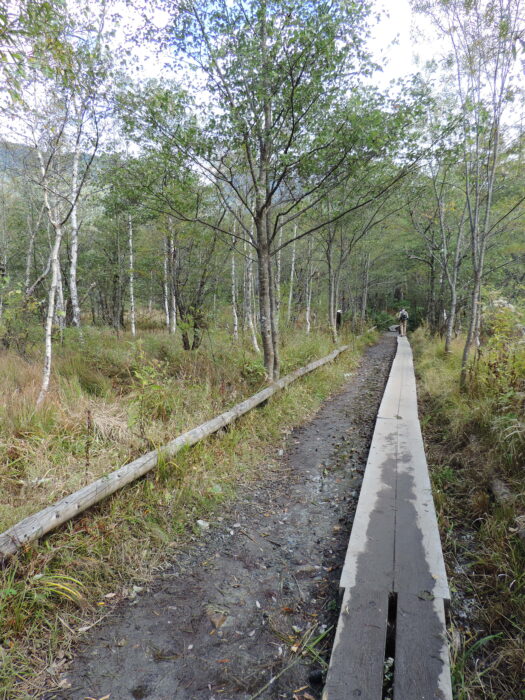
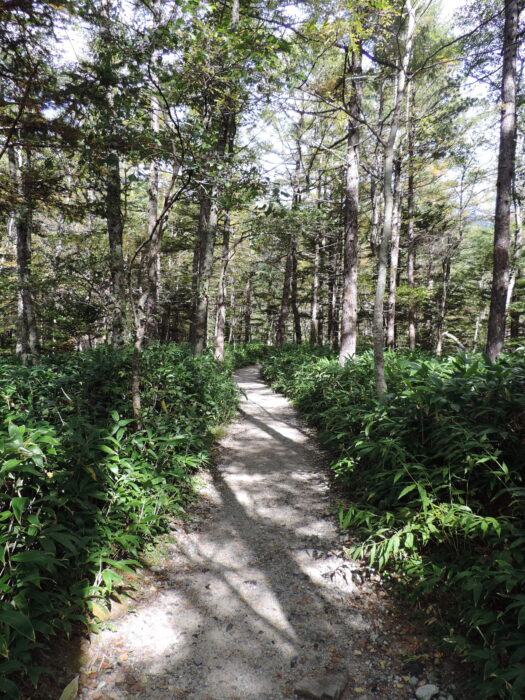
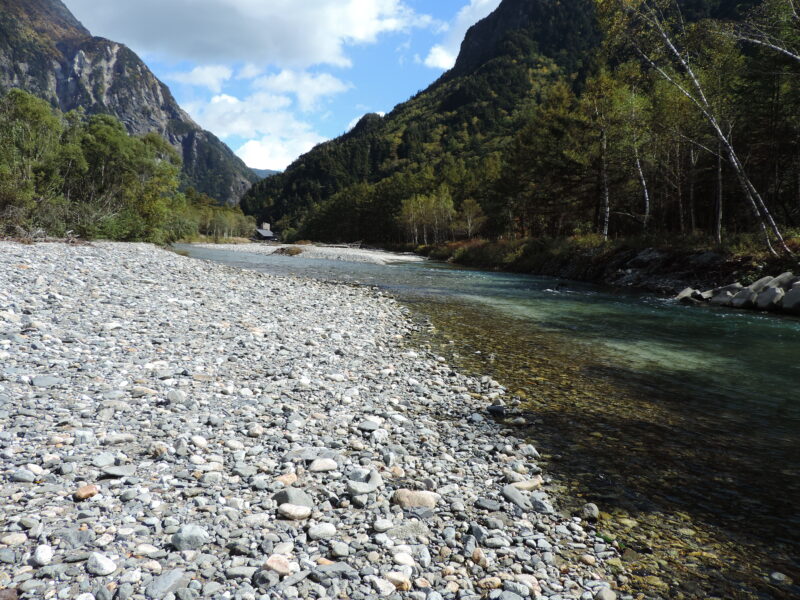
The Azusa River course was closed, so we took the forest trail instead.
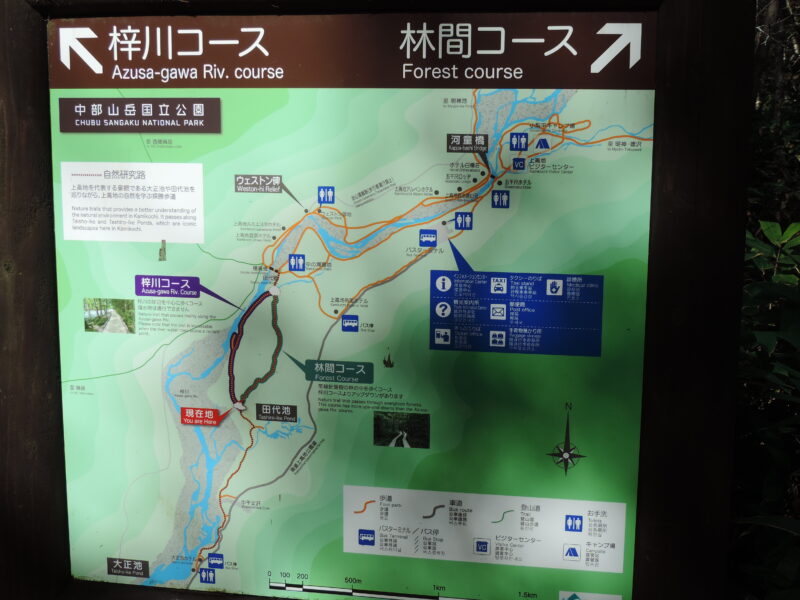
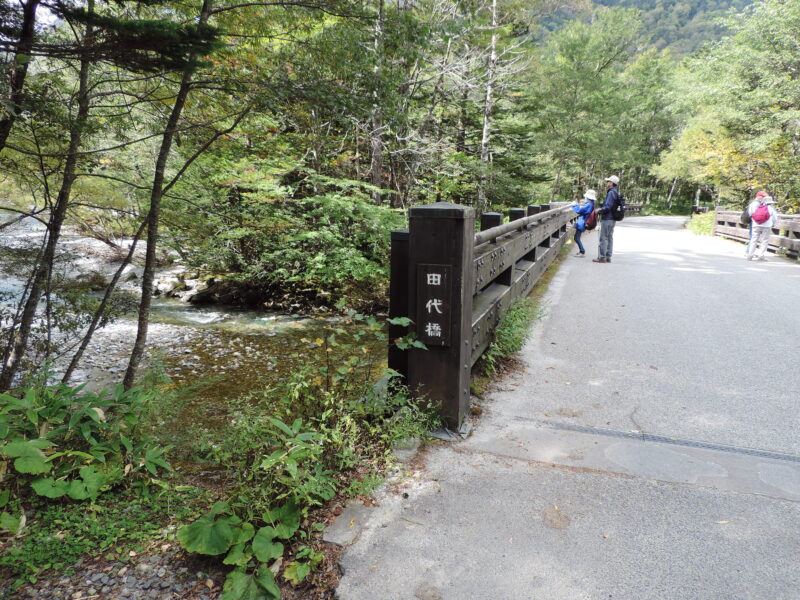
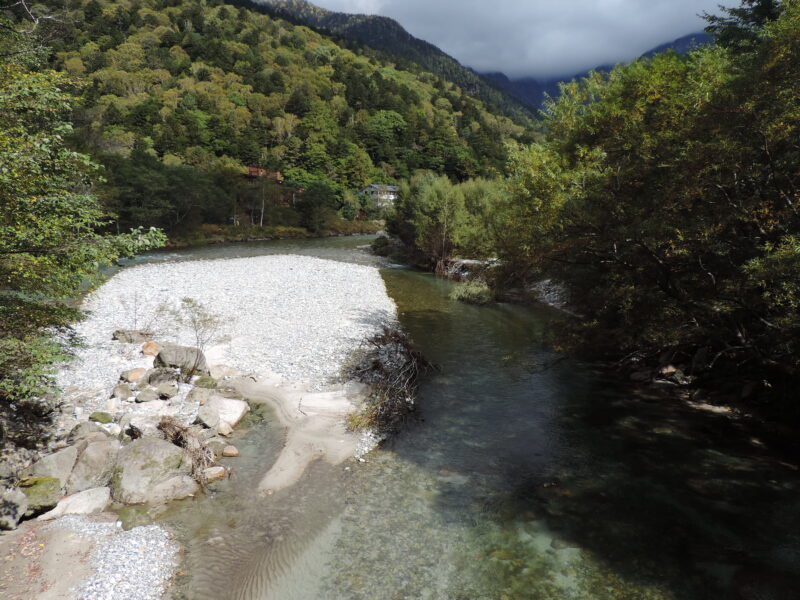
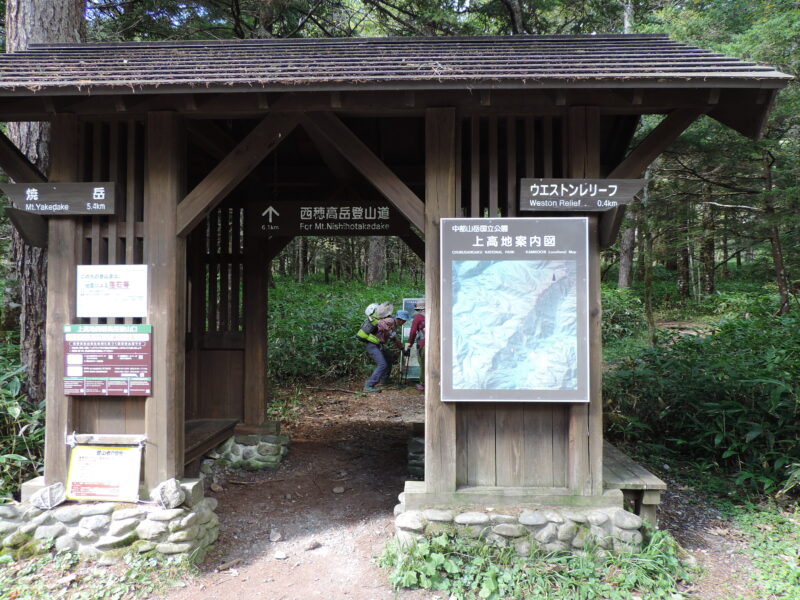
We arrived at Tashiro Bridge. From here you can reach the trail to Mt. Nishi-Hotaka.
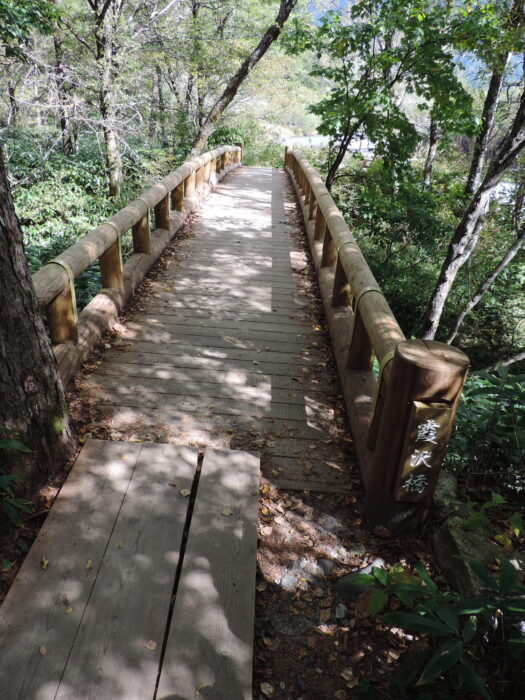
We continued toward Kappa Bridge.
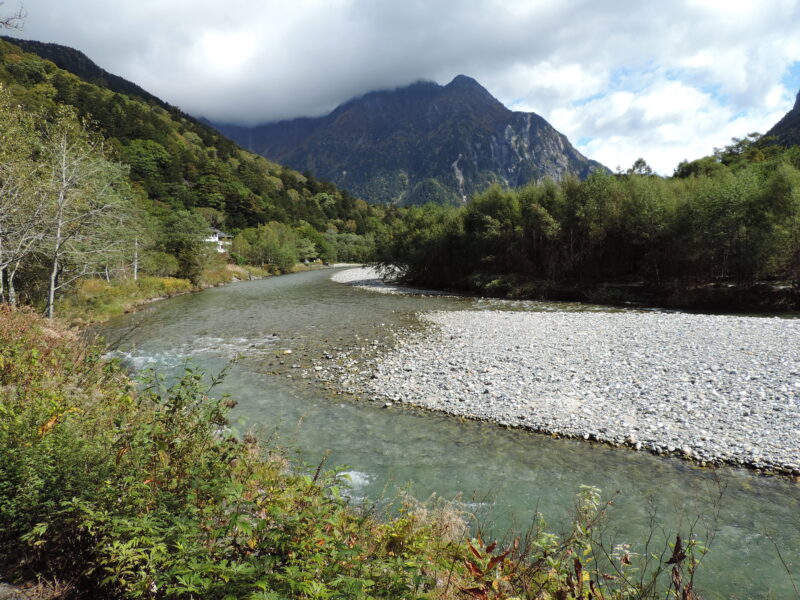
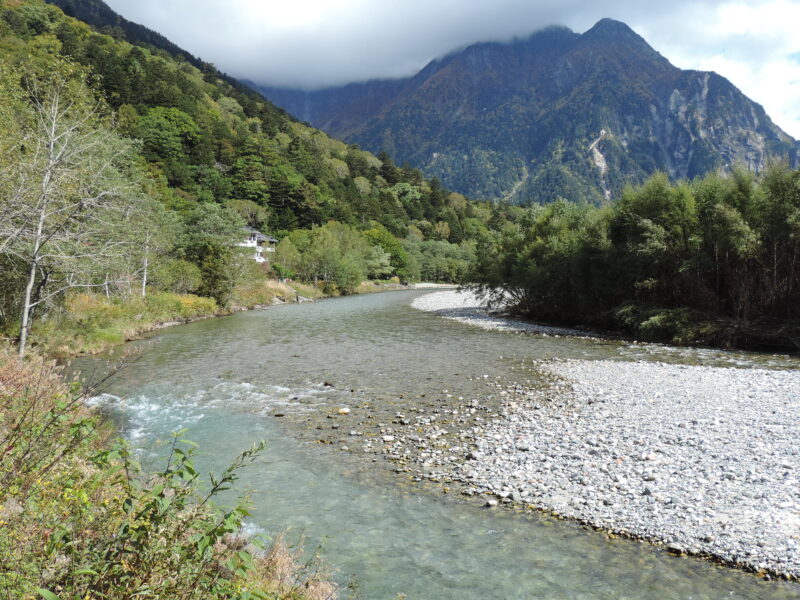
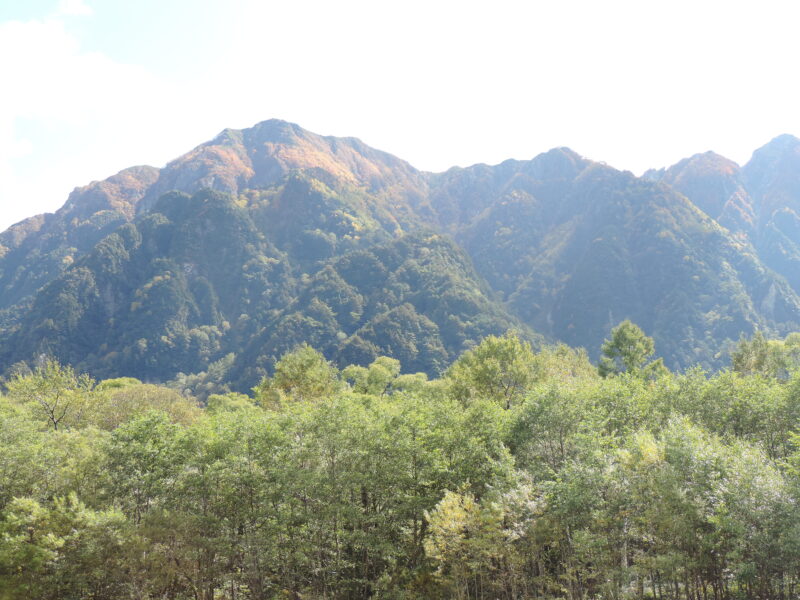
Mt. Roppyaku
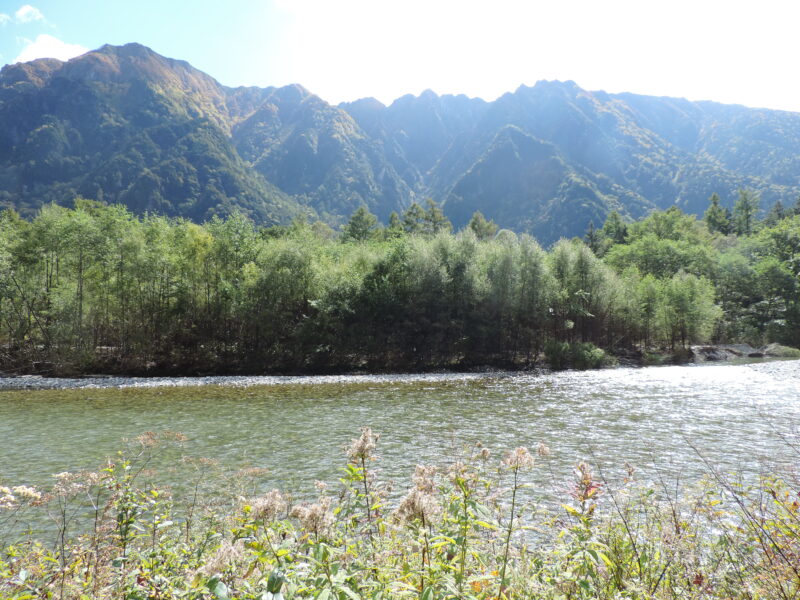
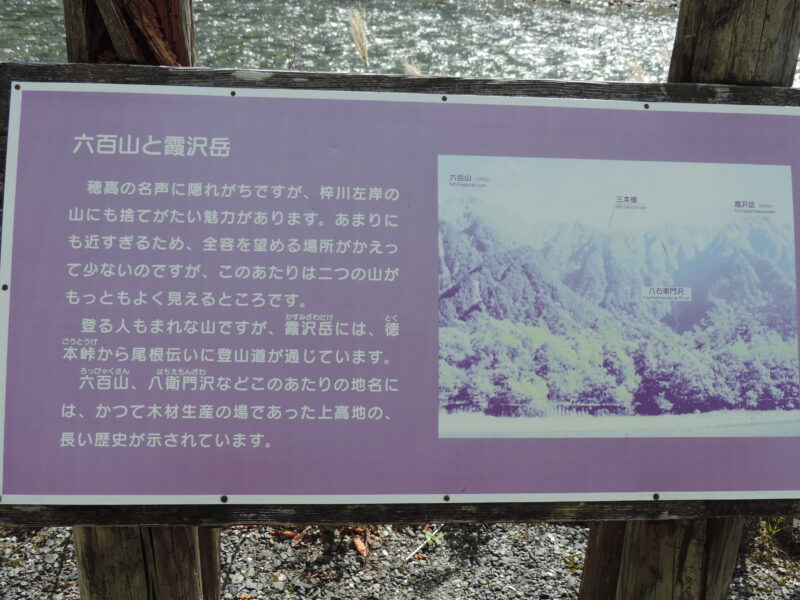
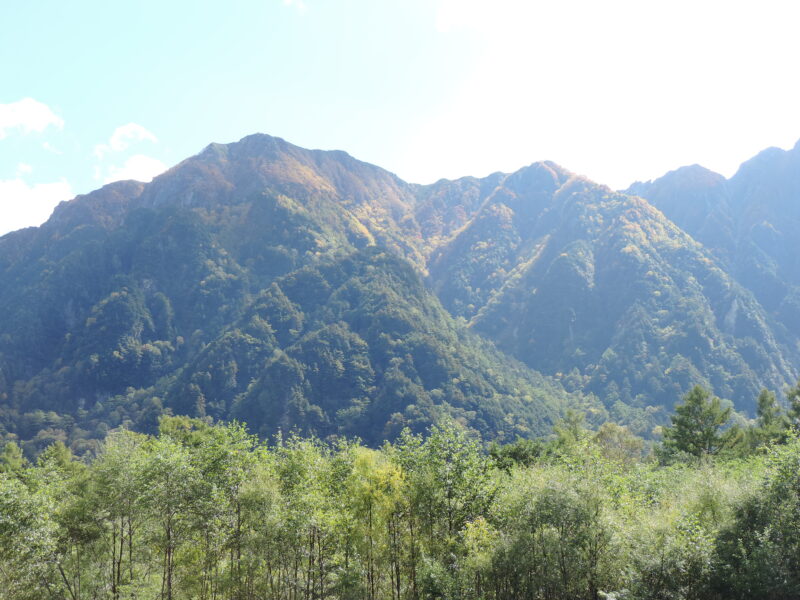
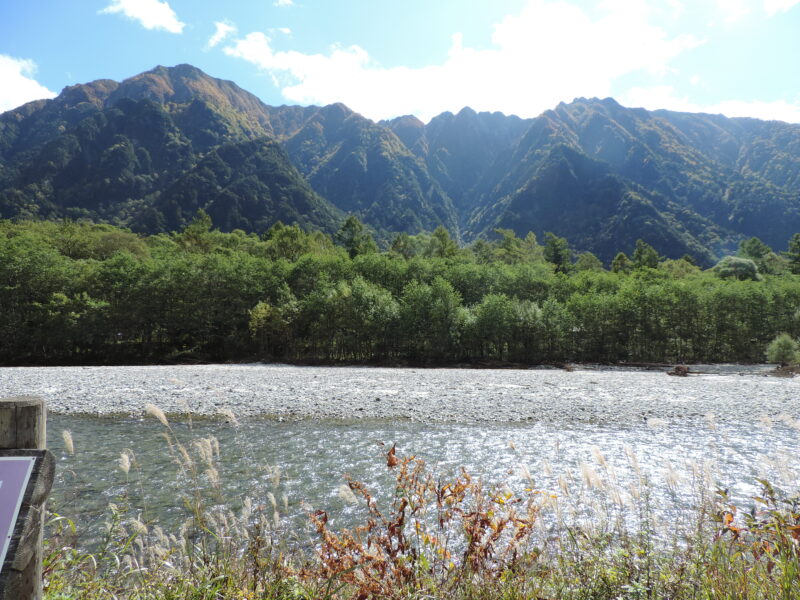
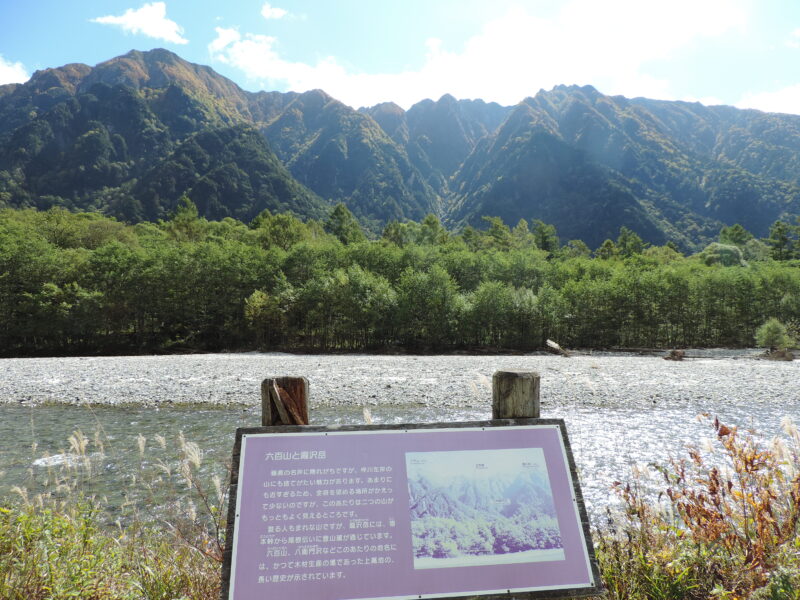
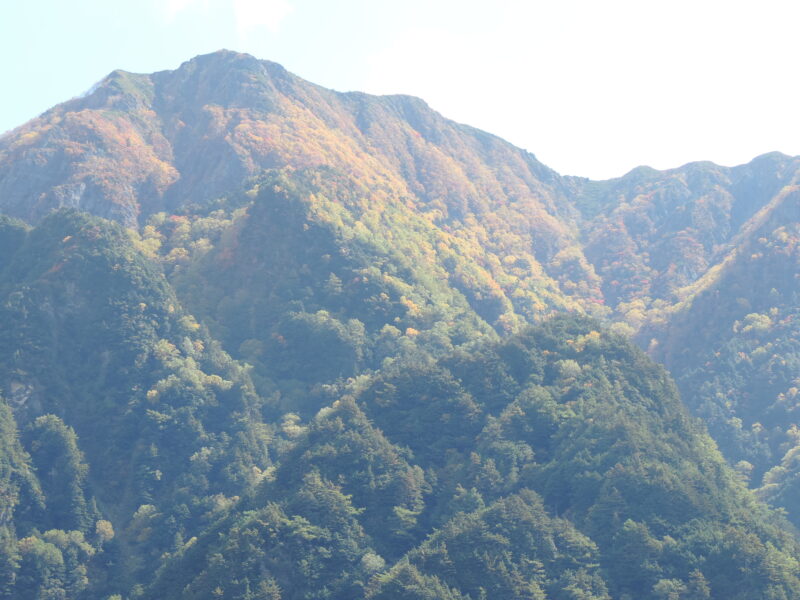
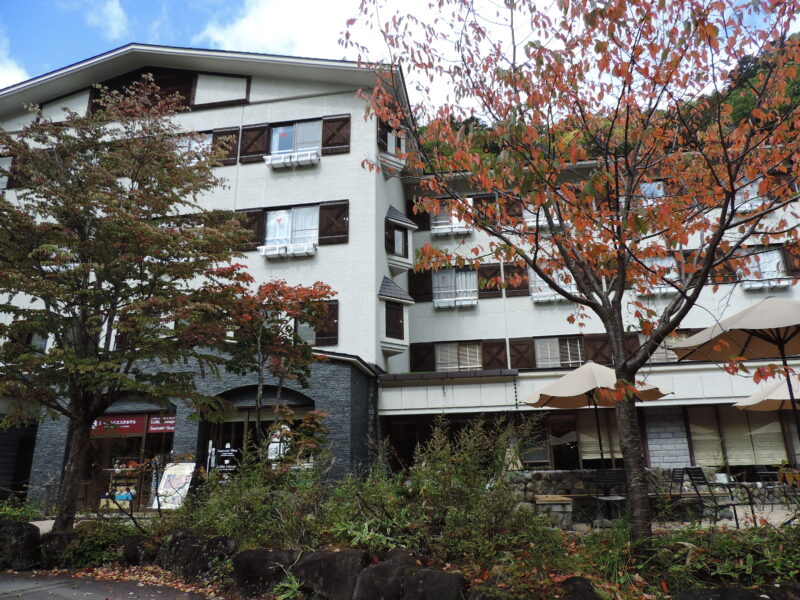
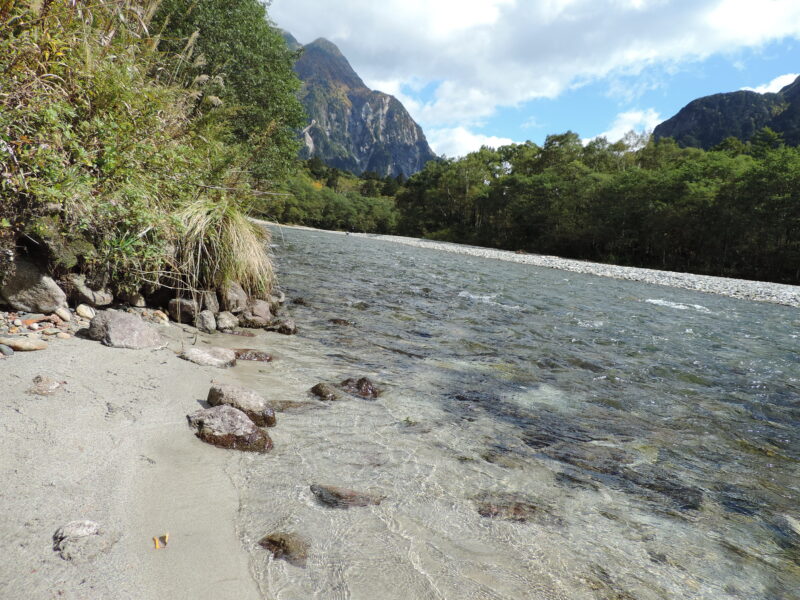
Click the video below to watch.
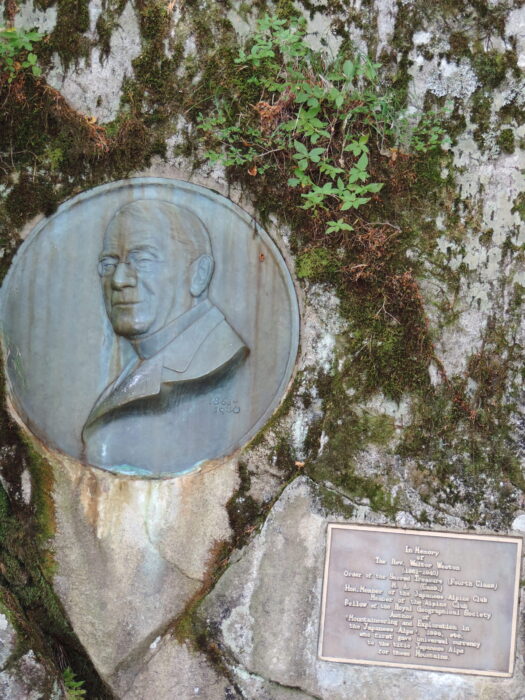
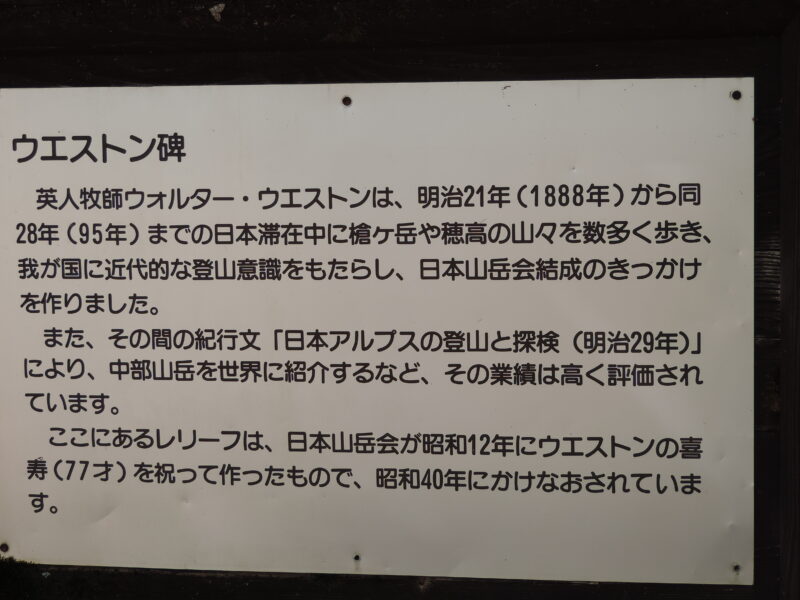
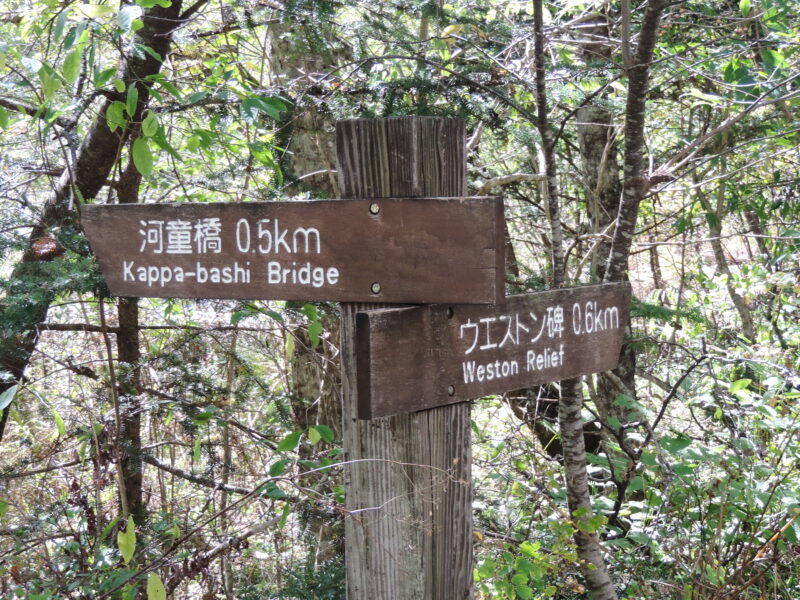
The Weston Monument
This relief honors Walter Weston, the English missionary who introduced the Japanese Alps to the world.
Click the video below to watch.
On to Kappa Bridge in Part 2.
How to Get to Kamikochi from Nagoya
- Nagoya to Matsumoto: about 2 hours by limited express train
- Matsumoto to Shin-Shimashima: about 30 minutes by local train
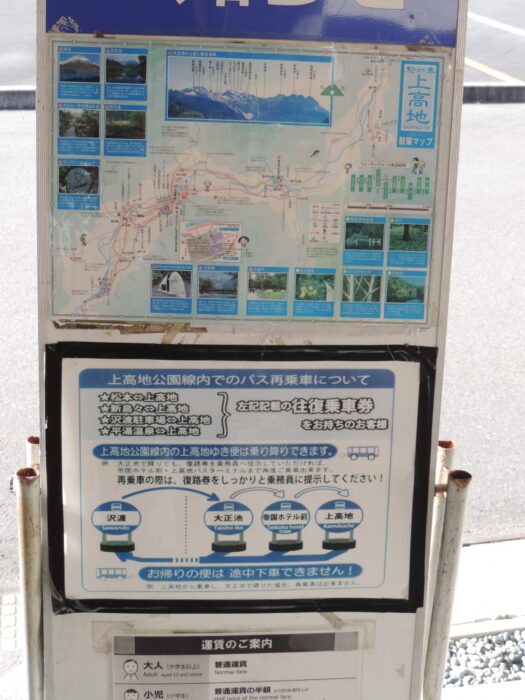
- Shin-Shimashima to Kamikochi: about 1 hour by bus
Nagoya to Matsumoto
From Nagoya, take the JR Chuo Line limited express “Shinano” to Matsumoto. Trains run about once an hour, so it is easy and convenient. At Nagoya Station the Shinano usually departs from platform 10, and it also stops at Chikusa and Tajimi. The ride to Matsumoto takes about 2 hours.
Check! On the way back, Matsumoto is not the starting station of the Shinano bound for Nagoya, so the train can be crowded. If you book the trip yourself, we recommend reserving a seat. Travel agency packages usually include reserved seats for the round trip.
Matsumoto Station
The Alpico Kamikochi Line, the local train toward Kamikochi, leaves from platform 7 at Matsumoto Station, inside the same ticket gates as JR. If you arrive by limited express and go straight to Kamikochi, you can walk directly to platform 7. You can buy your ticket from Matsumoto to Kamikochi when you change to the bus at Shin-Shimashima Station, the last stop. If you exit the ticket gates or arrive by highway bus, buy a ticket from the Kamikochi Line ticket machine.
Matsumoto to Shin-Shimashima
The Kamikochi Line is a cute two-car train that runs slowly through the town of Matsumoto and out into the countryside. On a clear day you can enjoy mountain views, and it is fun to see tourists and local students riding together.
There are also direct buses from the Matsumoto Bus Terminal (about 5 minutes’ walk from the station) to Kamikochi. Advance reservations are required and there are only a few buses a day, but if the timing works for you, it is a convenient way to travel without changing.
Shin-Shimashima Station
The bus stop is right outside the ticket gate. The bus ride takes more than an hour, so use the restroom before you board. Buses to Norikura Kogen sometimes leave at the same time, so be careful to board the right one.
Shin-Shimashima to Kamikochi
The bus follows the valley of the Azusa River. Soon after departure you cross a bridge, with the river on your left. After Inakoki Dam the reservoir appears on the right, then on the left again, although many tunnels make it hard to see. Tunnels and gorge views alternate as you pass the Sawando hot spring area.
After the last tunnel you finally enter Kamikochi, and Taisho Pond appears on the left, as if to say “Welcome to Kamikochi.” The road then continues through the forest to the bus terminal.
Kamikochi Bus Terminal
The terminal has a visitor center, an information desk, pay toilets, shops and luggage storage.
Check! Return buses require a reservation for a specific departure time. You can reserve online or at the counter in the bus terminal when you buy your ticket, from one month before up to 15 minutes before departure. Only the departure time is reserved; seats are first come, first served. Bus rules and timetables change, so please check the latest information before your trip.
Official guide: https://www.japan.travel/en/japans-local-treasures/japan-alps-kamikochi-2022/